Follow us on:

Economy and Global Markets | June 8, 2026
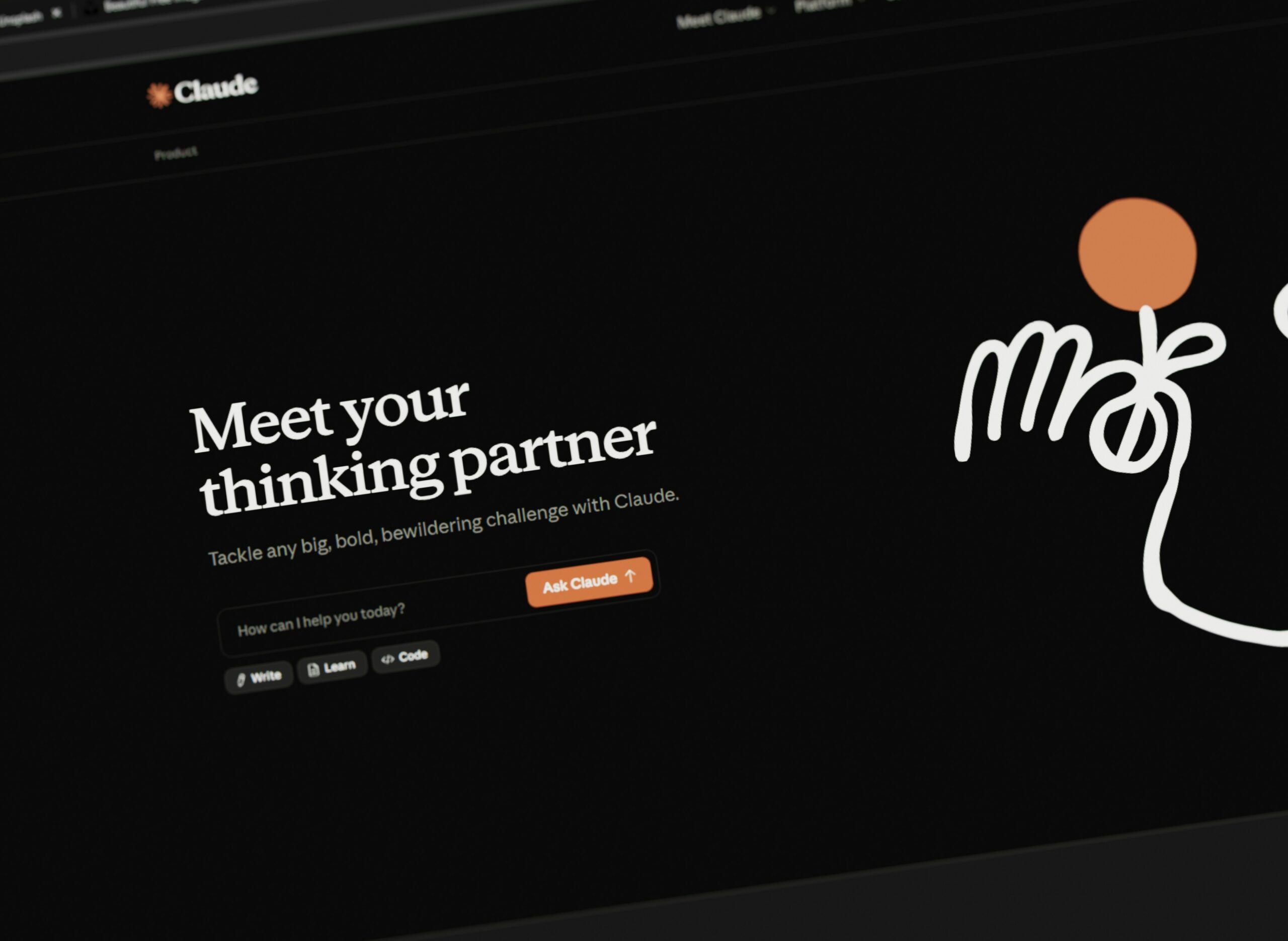
On June 1, 2026, Anthropic, the American AI company behind the Claude family of models, confidentially filed for an initial public offering with the US Securities and Exchange Commission. The filing followed a $65 billion Series H funding round that valued the company at $965 billion, the highest private valuation ever recorded for an AI company, surpassing OpenAI. Revenue has grown from $1 billion annualised at the end of 2024 to a run rate of approximately $47 billion by May 2026. This article covers what Anthropic is, how it got here, the full financial picture, the risks, and what this IPO means for global investors.
Table of Contents
- Part I: What Is Anthropic and Who Built It Founded January 2021, ex-OpenAI team, Public Benefit Corporation, safety-first mandate
- Part II: What Anthropic Actually Sells Claude API, Claude Code, Claude.ai, enterprise model, 300,000 business customers
- Part III: The Revenue Trajectory $1B to $47B in 18 months, 10x annual growth, Q2 2026 projection, first profitable quarter
- Part IV: Funding History and Investor Stakes $132 billion raised across 18 rounds, Amazon $8B, Google $3B, Series H at $965B
- Part V: The IPO Filing: What Is Known and What Is Not Confidential S-1, no ticker yet, $60 billion raise expected, October 2026 window
- Part VI: Competitive Position Anthropic vs OpenAI vs Google DeepMind, enterprise vs consumer strategy, Claude Code 54% market share
- Part VII: The Risks Every Investor Must Understand Losses of $5.6B, compute dependence, DoD standoff, AI bubble risk, revenue reporting nuance
- Part VIII: What This IPO Means for Indian Investors LRS route, direct equity exposure, Indian IT sector impact, indirect plays
- Frequently Asked Questions
$965B
Valuation at Series H close, May 2026. Highest private AI company valuation ever.
~$47B
Revenue run rate as of May 2026, up from $1B annualised at end of 2024.
$132B
Total funding raised across 18 rounds since founding in January 2021.
June 1, 2026
Date of confidential S-1 filing with the US SEC. No public prospectus yet released.
Part IWhat Is Anthropic and Who Built It
The Origin Story
Anthropic was founded in January 2021 by Dario Amodei and Daniela Amodei, along with five other researchers, the majority of whom were former senior employees of OpenAI. Dario had served as Vice President of Research at OpenAI. Daniela led Safety and Policy. Their departure from OpenAI stemmed from fundamental disagreements about how aggressively to scale AI systems and how much weight to give safety research relative to capability development.
The company is headquartered in San Francisco. It is structured as a Public Benefit Corporation, a legal designation in the United States that embeds a social mission into the corporate charter. In Anthropic’s case, that mission is the responsible development and maintenance of advanced AI for the long-term benefit of humanity. This structure means shareholders cannot legally instruct the company to abandon its safety mission in pursuit of shareholder returns alone. The PBC status is a deliberate choice and a differentiating signal to enterprise customers who are wary of unconstrained AI development.
Why It Was Built Differently
Anthropic’s founding premise was that AI systems were becoming powerful enough to pose genuine risks if developed without sufficient attention to alignment, interpretability, and safety. The company invests significantly in research designed to understand how large AI models actually work internally, not just what outputs they produce. This research focus, combined with a deliberate enterprise-first go-to-market strategy, shaped the product and business model that now underpins the IPO story.
The Public Benefit Corporation structure matters for investors: When Anthropic goes public, the PBC designation means it will have obligations beyond maximising shareholder value. Investors considering the stock need to understand this. The company cannot simply pivot to the highest-margin, fastest-growth strategy if that strategy conflicts with its stated mission. This is a genuine governance constraint, not just a marketing claim. It has already influenced decisions including the February 2026 standoff with the US Department of Defense over autonomous weapons applications.
Part IIWhat Anthropic Actually Sells
The Core Product: The Claude API
Anthropic’s primary revenue source is access to its Claude family of AI models through an application programming interface. Companies and developers pay per token consumed, where a token is roughly equivalent to three-quarters of a word. The more a business uses Claude, the more it pays. This pay-per-consumption model scales directly with enterprise adoption.
Claude is available in three tiers: Claude Opus for the most complex reasoning and analysis tasks, Claude Sonnet for balanced performance and speed, and Claude Haiku for fast, lightweight applications. Eight of the Fortune 10 companies use Claude. Over 300,000 businesses are customers. The number of customers spending more than $100,000 annually has grown sevenfold in one year. The number spending more than $1 million annually grew from approximately 500 in February 2026 to over 1,000 by April 2026.
Claude is the only frontier AI model simultaneously available on Amazon Web Services Bedrock, Google Cloud Vertex AI, and Microsoft Azure AI Foundry. This multi-cloud availability is a significant commercial advantage. An enterprise already on any of these three platforms can access Claude without building a separate vendor relationship.
Claude Code: The Breakout Product
Claude Code, launched in May 2025 as an agentic coding assistant, reached $1 billion in run-rate revenue within six months of launch. By early 2026, its annualised billings exceeded $2.5 billion. Claude Code holds approximately 54 percent of the enterprise coding market, compared to OpenAI’s 21 percent. Business subscriptions to Claude Code quadrupled in the six weeks from January 1, 2026 alone.
The product allows developers and non-technical users to instruct Claude to write, review, debug, and deploy code autonomously. It is not an autocomplete tool. It is an agent that can take multi-step actions across a codebase. For enterprises with large software teams, the productivity multiplier is significant and measurable, which is why adoption has been rapid and retention high.
Claude.ai: The Consumer Interface
Claude.ai is Anthropic’s direct consumer product, a chat interface comparable to ChatGPT. It serves approximately 18.9 million monthly active users on the web, with additional millions on mobile. However, consumer-facing Claude.ai is not the business. It is an acquisition channel and a brand awareness vehicle. Approximately 85 percent of Anthropic’s revenue comes from enterprise and business API customers, not consumer subscriptions.
| Product | Launched | Revenue Contribution | Key Metric |
|---|---|---|---|
| Claude API (enterprise) | 2023 | ~65% of total revenue | 300,000+ business customers, 7x growth in $100K+ accounts YoY |
| Claude Code | May 2025 | ~$2.5B+ annualised run rate (early 2026) | 54% enterprise coding market share |
| Claude.ai (consumer) | 2023 | ~15% of total revenue | 18.9M monthly active web users |
| Cloud reseller partners (AWS, GCP, Azure) | 2023-2024 | Significant; counted gross in revenue | 100,000+ customers on AWS Bedrock alone (April 2026) |
Part IIIThe Revenue Trajectory
A Growth Rate That Has No Precedent at This Scale
Anthropic’s revenue growth from 2024 to 2026 is, by any historical measure, extraordinary. No enterprise technology company has compounded at this rate at this scale for this many consecutive years.
-
Dec 2024$1 billion annualised revenue run rate
Anthropic crossed $1B ARR, establishing the baseline for what follows.
-
Jul 2025$4 billion annualised
Revenue quadrupled in seven months, driven by Claude Code launch and enterprise API adoption.
-
Dec 2025$9 billion annualised
End of 2025 run rate. 9x growth in twelve months.
-
Feb 2026$14 billion annualised
Reuters confirmed this figure. Claude Code exceeded $2.5B run rate on its own. Business subscriptions quadrupled from January 1.
-
Apr 2026$30 billion annualised
Revenue more than doubled from February to April as enterprise adoption accelerated sharply. Dario Amodei described the growth trajectory as “crazy.”
-
May 2026~$47 billion annualised
Run rate at time of IPO filing. Company expected Q2 2026 revenue of approximately $10.9 billion, more than double Q1’s $4.8 billion. First profitable quarter projected imminently.
One important nuance on the revenue figure: Anthropic reports revenue from cloud resellers including AWS, Google Cloud, and Microsoft Azure on a gross basis. This means the total amount that end customers pay through those platforms counts as Anthropic’s revenue, with the cloud partner’s margin booked as an expense. This inflates Anthropic’s top-line figure relative to companies that report net revenue after partner payouts. The underlying business is still large and growing rapidly. But investors reading the S-1 prospectus should understand that gross revenue reporting makes the number look larger than a net-revenue comparison with traditional software companies would suggest.
Part IVFunding History and Investor Stakes
Anthropic has raised approximately $132 billion across 18 funding rounds since its founding in January 2021. The pace of capital raising has accelerated dramatically, with the last three rounds alone totalling over $108 billion.
| Round | Date | Amount Raised | Post-Money Valuation | Key Investors |
|---|---|---|---|---|
| Seed / Early rounds | 2021-2022 | ~$1.45B | ~$5B | Spark Capital, Google, various angels |
| Series C | May 2023 | $450M | ~$5B | Google, Salesforce Ventures, Zoom Ventures |
| Series F | Sep 2025 | $13B | $183B | ICONIQ, Altimeter Capital, Sequoia Capital |
| Series G | Feb 2026 | $30B | $380B | GIC, Coatue, D.E. Shaw, Dragoneer, Founders Fund, ICONIQ, MGX, BlackRock-affiliated funds, Fidelity, General Catalyst, Sequoia, Temasek, TPG |
| Series H | Apr-May 2026 | $65B | $965B | Altimeter Capital, Dragoneer, Greenoaks, Sequoia Capital |
The Two Most Important Strategic Investors
Amazon and Google are not simply financial investors in Anthropic. They are strategic partners whose commercial relationships are deeply intertwined with the company’s infrastructure and distribution.
Amazon has invested approximately $8 billion in Anthropic to date, with a commitment to invest up to $20 billion more. Anthropic has, in turn, committed to spend more than $100 billion on Amazon’s cloud and chip infrastructure over the next decade. AWS sells Claude to its enterprise customers through its Bedrock platform. Over 100,000 customers access Claude through AWS Bedrock alone. In Q1 2026, Amazon booked $16.8 billion in pre-tax gains from its Anthropic position, including $12.3 billion from upward revaluation following the Series H.
Google owns approximately 14 percent of Anthropic through multiple investments totalling roughly $3 billion. Google has reported $10.7 billion in net gains on those securities. Google Cloud distributes Claude through its Vertex AI platform. Anthropic also has a multi-gigawatt compute agreement with Google and Broadcom for next-generation TPU capacity.
The strategic investor dependency is a risk, not just an asset: Amazon and Google are simultaneously Anthropic’s largest investors, its primary cloud infrastructure providers, and distributors of its products to end customers. This creates a web of commercial interdependency that will face intense scrutiny when the S-1 is filed publicly. If Amazon or Google develops competing AI products that they prefer to sell over Claude, or if either company adjusts the commercial terms of their cloud agreements, the impact on Anthropic’s revenue could be significant. Investors will need to assess how much of Anthropic’s revenue growth is organically driven versus structurally supported by partner commitments.
Part VThe IPO Filing: What Is Known and What Is Not
What a Confidential Filing Means
On June 1, 2026, Anthropic filed a confidential registration statement with the US Securities and Exchange Commission. A confidential filing, sometimes called a draft registration statement, allows companies to begin the formal IPO process while keeping financial details private from competitors and the public. The company must make the filing public at least fifteen days before beginning its investor roadshow.
The filing itself confirms intent and starts the regulatory clock. It does not confirm a listing date, a price range, the number of shares being offered, or the stock exchange where trading will begin. All of these will be disclosed in the public S-1 prospectus when it is released.
What Is Expected
Reports from multiple financial news organisations suggest Anthropic is in early discussions with Goldman Sachs, JPMorgan, and Morgan Stanley as lead underwriters. The expected raise from the IPO exceeds $60 billion, which would make it one of the largest IPO fundraises in history. An October 2026 listing window has been discussed, though this depends on SEC review timelines and market conditions.
At the Series H valuation of $965 billion, Anthropic would enter the public markets as one of three companies globally that could achieve a valuation above $1 trillion on listing, something that has never previously happened even once in the history of US public markets. Secondary market trading of Anthropic shares through platforms like Forge Global showed implied valuations near $1 trillion in late April 2026, with one offer reportedly at $1.15 trillion.
| IPO Parameter | Status as of June 8, 2026 |
|---|---|
| Filing type | Confidential S-1 submitted to SEC on June 1, 2026 |
| Public prospectus | Not yet released. Required at least 15 days before roadshow. |
| Expected raise | Reports suggest over $60 billion, unconfirmed |
| Expected valuation at listing | Approximately $965 billion to $1+ trillion based on secondary market pricing |
| Expected listing timeline | October 2026 discussed in reports. Depends on SEC review and market conditions. |
| Lead underwriters | Goldman Sachs, JPMorgan, Morgan Stanley reported in early discussions |
| Stock exchange | Not yet confirmed. Nasdaq is the conventional choice for US tech listings. |
| Ticker symbol | Not yet assigned |
Part VICompetitive Position
Anthropic vs OpenAI: The Key Distinction
Anthropic and OpenAI are the two dominant frontier AI companies. Understanding how they differ commercially is essential for evaluating the IPO.
OpenAI generates approximately 85 percent of its revenue from individual consumers through ChatGPT subscriptions. It has over 900 million weekly users and massive consumer brand recognition. Its valuation stood at approximately $852 billion as of March 2026, below Anthropic’s $965 billion Series H mark.
Anthropic derives approximately 85 percent of its revenue from business customers. Eight of the Fortune 10 are Claude customers. The enterprise-first strategy produces higher revenue per customer, more stable contracts, and lower churn than consumer subscriptions. It also means Anthropic is less exposed to consumer sentiment and more insulated from competitive pricing pressure at the commodity end of the AI market.
| Dimension | Anthropic | OpenAI | Google DeepMind (Gemini) |
|---|---|---|---|
| Valuation (latest) | $965B (Series H, May 2026) | ~$852B (March 2026 round) | Not independently listed; part of Alphabet |
| Revenue model | 85% enterprise API and B2B | 85% consumer (ChatGPT subscriptions) | Integrated into Google Cloud and consumer products |
| Enterprise coding market | 54% share (Claude Code) | 21% share | Minority share |
| Cloud distribution | AWS, Google Cloud, Azure (all three) | Azure primarily | Google Cloud primarily |
| Safety positioning | Core founding principle, PBC structure | Stated but not structurally embedded | Embedded in DeepMind research heritage |
| IPO status | Confidential S-1 filed June 1, 2026 | Not yet filed. Still structured as for-profit capped LLC. | Not applicable |
Part VIIThe Risks Every Investor Must Understand
The Company Is Still Losing Money
Despite the extraordinary revenue growth, Anthropic posted a loss of approximately $5.6 billion in 2025. The company expects to reach positive cash flow by 2027. It has not yet had a profitable year. The path to profitability depends on revenue continuing to outpace the enormous cost of training and running frontier AI models, which requires vast amounts of compute, electricity, and specialised hardware.
The compute cost structure is the central financial risk. Training a frontier model at Anthropic’s level requires spending that rivals the capital budgets of large industrial companies. Running the model at the query volumes Anthropic now handles costs hundreds of millions of dollars per month. These costs scale with usage, but if revenue growth decelerates, the cost base does not reduce proportionally.
Infrastructure Concentration Risk
In March 2026, Anthropic suffered at least five major outages following intensive product launches. These outages exposed an over-reliance on AWS infrastructure. When a single cloud provider accounts for the majority of your compute capacity and experiences disruptions, your product goes down for your customers. This concentration risk is commercially significant and will be examined closely by institutional investors evaluating the IPO.
The Department of Defense Standoff
In February 2026, Anthropic had a very public disagreement with the US Department of Defense over proposed use cases for autonomous weapons applications. Anthropic declined to support certain military AI applications, citing its safety mission and PBC charter. This standoff was publicly reported and created uncertainty about the company’s relationship with the US federal government as a potential customer category. Federal contracts represent a significant revenue opportunity for enterprise AI companies. Anthropic’s principled position on military applications may limit its addressable market in ways that competitors without the same constraints will not face.
Valuation and the AI Bubble Question
Anthropic’s $965 billion valuation implies a price-to-revenue multiple of approximately 20 times forward run-rate revenue. For context, Microsoft trades at around 12 times forward revenue and it is one of the most richly valued software companies in the world. Alphabet trades at approximately 7 times forward revenue. The implicit argument for Anthropic’s multiple is that its revenue will continue growing at 10 times annually, compressing the valuation relative to future earnings. That is a bet on continued growth at a pace no technology company has ever maintained at this scale for an extended period.
The PitchBook analyst assessment is worth noting: Harrison Rolfes of PitchBook said of the IPO filing: “The 2026 window either becomes the most consequential IPO cycle since the dot-com era or the most expensive lesson in narrative-versus-fundamentals that public markets have ever taught.” The revenue is real. The growth is real. But the valuation multiple requires the growth to continue at an unprecedented rate. Public market investors will have to decide whether they believe it will.
Part VIIIWhat This IPO Means for Indian Investors
Can Indian Retail Investors Buy Anthropic Shares?
Anthropic is currently private. No shares are available on any stock exchange. Indian retail investors cannot buy Anthropic stock today. Secondary market platforms like Forge Global and EquityZen occasionally list Anthropic shares, but these are accredited-investor-only platforms in the US jurisdiction and are not accessible to Indian retail investors under normal circumstances.
Once Anthropic completes its IPO and lists on a US exchange, Indian investors can buy shares through the Liberalised Remittance Scheme route. Under LRS, resident Indians can remit up to USD 250,000 per financial year for investment purposes, including direct equity purchases on US exchanges through platforms that have RBI-compliant LRS processes. After the IPO, standard brokerage platforms with US stock access will offer Anthropic shares like any other listed US stock.
The Indirect Impact on India’s IT Sector
Anthropic’s IPO is not just an investment story. It has direct implications for India’s technology sector. Claude Code holds 54 percent of the enterprise coding market. As more enterprises adopt AI coding agents, the demand for large teams of software developers to perform routine coding, testing, and maintenance tasks will change structurally. India’s IT services industry, which employs over 5 million people and has historically provided cost-effective software development and maintenance to global enterprises, will need to adapt its service model as AI agents take on an increasing share of what those teams currently do.
This does not mean Indian IT jobs disappear immediately. But it does mean that the growth in headcount-based IT services revenue will slow, and the sector will need to shift toward higher-value work: AI integration, customisation, oversight, and the complex problem-solving that AI agents cannot yet reliably handle. Indian IT companies like TCS, Infosys, and Wipro are themselves building AI capabilities and deploying Claude and similar tools internally to improve productivity. The net effect is complex, but the Anthropic IPO is one of the clearest signals yet of the pace at which AI is reshaping the services landscape.
For Indian investors tracking the AI opportunity: Direct Anthropic exposure after IPO via LRS is possible. Indirect exposure is available now through Indian IT companies managing the AI transition (TCS, Infosys, HCL Tech), through listed US AI infrastructure plays (Nvidia, which has committed up to $10 billion in Anthropic’s Series G and is a hardware beneficiary of AI compute demand), and through AI-exposed Indian mutual funds and fund of funds that hold US technology equities.
Frequently Asked Questions
Anthropic closed a $65 billion Series H funding round at a post-money valuation of $965 billion in late May 2026, making it the most valuable private AI company in the world, surpassing OpenAI at approximately $852 billion. On June 1, 2026, Anthropic filed a confidential registration statement with the US Securities and Exchange Commission, formally starting the IPO process. No public prospectus has been released. No listing date, price range, or ticker symbol has been announced. Reports suggest an October 2026 listing window with an expected raise exceeding $60 billion, but these remain unconfirmed until the public S-1 is filed.
Anthropic’s revenue has grown approximately 47 times in 18 months: from $1 billion annualised at the end of 2024 to approximately $47 billion annualised run rate in May 2026. The milestones along the way: $4 billion by July 2025, $9 billion by December 2025, $14 billion by February 2026 (confirmed by Reuters), $30 billion by April 2026, and approximately $47 billion by May 2026. The company expects Q2 2026 revenue of approximately $10.9 billion, more than double Q1’s $4.8 billion. Dario Amodei described the pace of growth as “crazy.” No enterprise technology company has grown at this rate at this scale for consecutive years. The company projects its first profitable quarter imminently and positive cash flow by 2027.
Not yet. Anthropic posted a loss of approximately $5.6 billion in 2025. The company has not yet had a profitable year. The losses stem from the enormous cost of training and running frontier AI models: compute infrastructure, electricity, specialised chips, and research talent. However, the revenue growth trajectory means the company expects to reach positive cash flow by 2027. The company projects its first profitable quarter by mid-to-late 2026. For investors evaluating the IPO, the key question is whether revenue growth continues to outpace the cost base fast enough to make the profitability path credible at the implied listing valuation.
Not yet. Anthropic is currently private and its shares are not available on any public stock exchange. Once Anthropic completes its IPO and lists on a US exchange (expected around October 2026 based on current reports), Indian resident investors can purchase shares through the Liberalised Remittance Scheme. Under LRS, resident Indians can remit up to USD 250,000 per financial year for overseas investment including direct equity purchases on US exchanges. Platforms offering LRS-compliant US stock investment include several Indian brokerages with international partnerships. Until the IPO is completed and the stock is listed, there is no legitimate route for Indian retail investors to buy Anthropic shares.
There are four primary risks. First, the company is still loss-making, with a $5.6 billion loss in 2025, and profitability depends on continued extraordinary revenue growth. Second, its valuation of $965 billion implies a revenue multiple of approximately 20 times forward run rate, far above comparably sized technology companies, pricing in growth that must continue at unprecedented rates. Third, Anthropic is structurally dependent on Amazon and Google for both its cloud infrastructure and commercial distribution; if either partner changes terms or prioritises competing products, revenue could be affected. Fourth, the company’s Public Benefit Corporation structure and safety mission mean it may decline certain revenue opportunities, including some government and military applications, that competitors will pursue. The February 2026 DoD standoff illustrated this risk in practice.
The Most Scrutinised Listing in Tech History
Anthropic’s IPO is not a conventional technology listing. It is a test of whether public markets are willing to value a frontier AI company on the basis of a growth trajectory that has no historical precedent at this scale, at a valuation that has never been achieved by a private company going public on a US exchange.
The revenue is real. Growing from $1 billion to $47 billion in eighteen months is not a narrative. It is a financial result. Eight of the Fortune 10 as customers is not a projection. The enterprise adoption is genuine and the retention appears strong. Claude Code holding 54 percent of the enterprise coding market within a year of launch is a commercially meaningful number.
But the valuation requires the growth to continue at a pace that even Anthropic’s own CEO has called “crazy.” Compute costs are enormous. The company is not yet profitable. Its two largest investors are also its two largest infrastructure providers and distributors, a structural complexity that public investors will examine carefully. And the AI sector as a whole is attracting capital at levels that carry genuine bubble risk if the revenue growth across the industry slows before the valuations compress.
For Indian investors and observers, the Anthropic IPO is a mirror held up to the pace of AI’s reshaping of the global economy. It is also a direct signal about the future of the Indian IT services sector, which will need to adapt faster than its historical cycles have required. Watch for the public S-1, read it carefully when it arrives, and understand what you are buying before the hype makes that harder to do.
Disclaimer: This article is for informational and educational purposes only and is current as of June 8, 2026. Anthropic has not released a public prospectus. All financial figures are based on publicly reported funding disclosures, media reports, and secondary market data. IPO terms, valuation, and timeline remain unconfirmed until the public S-1 filing. Nothing in this article constitutes investment advice. Always conduct your own research and consult a qualified financial adviser before making investment decisions. Last updated: June 8, 2026.