Follow us on:


Business Explainers | June 10, 2026
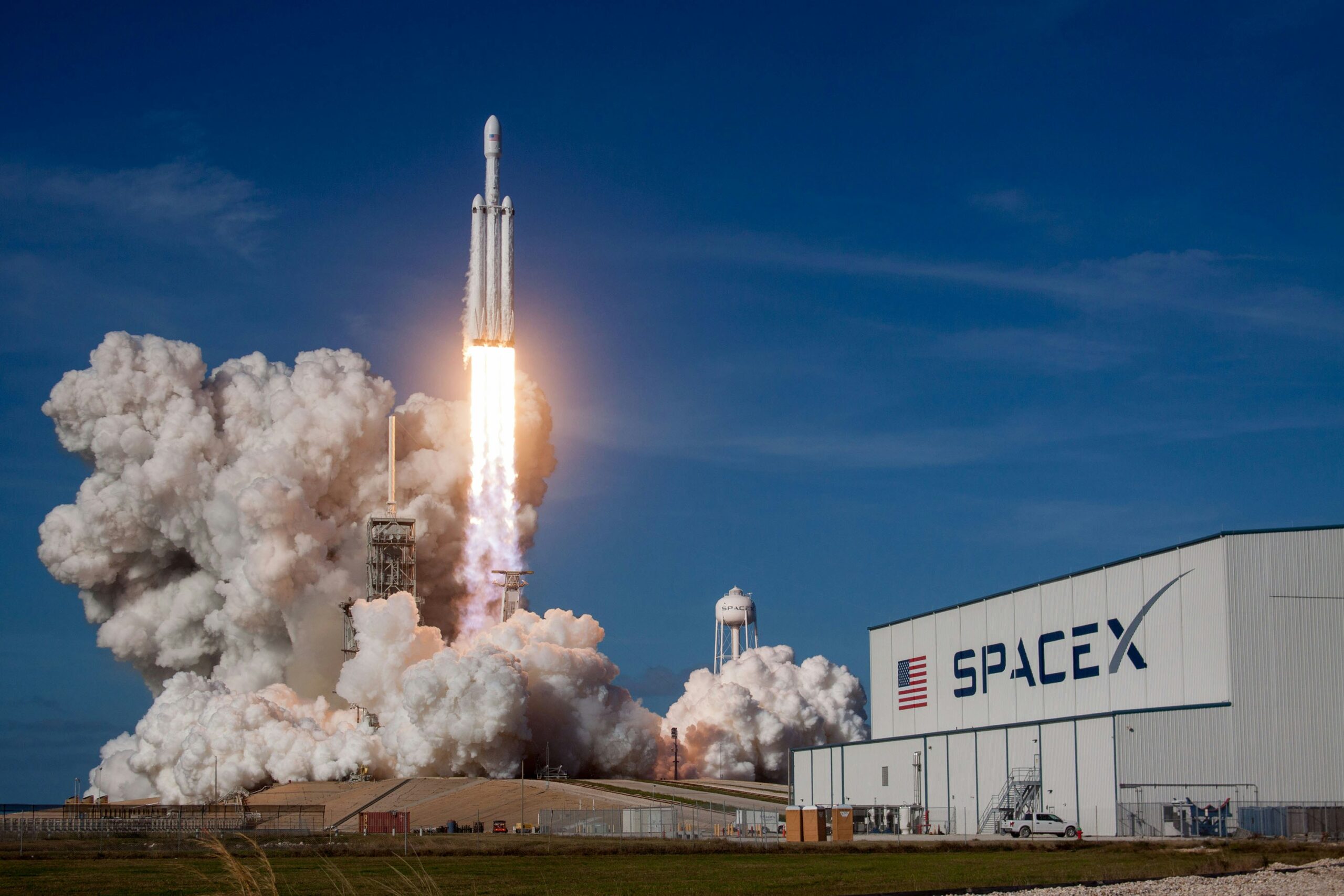
On June 12, 2026, Space Exploration Technologies Corp. is scheduled to begin trading on the Nasdaq under the ticker SPCX at a fixed price of $135 per share, targeting a raise of $75 billion at a valuation of approximately $1.75 trillion. That would make it the largest IPO in stock market history, eclipsing Saudi Aramco’s $29 billion debut in 2019 by a factor of more than two and a half. But the company going public is not the SpaceX of popular imagination. Through the February 2026 acquisition of Elon Musk’s artificial intelligence company xAI, which itself had previously acquired the social media platform X (formerly Twitter), SpaceX now reports across three business segments: Space, Connectivity (Starlink), and AI. This article traces the company’s founding and operational history, dissects the financial picture disclosed in its S-1 filing, explains the IPO mechanics and dual-class governance structure, and assesses what the offering actually means for investors.
Table of Contents
- Part I: From a $100 Million Bet to the World’s Largest Launch Provider Founding in 2002, Falcon 1 failures, Falcon 9 reusability, and the path to market dominance
- Part II: Three Business Segments and What Each One Does The Space launch business, Starlink’s satellite internet, and the xAI and X acquisition
- Part III: What the S-1 Actually Shows: Revenue, Losses, and the Starlink Engine $18.7 billion in 2025 revenue, a $4.94 billion net loss, and what Starlink’s $4.4 billion operating profit means
- Part IV: The IPO Structure: Price, Float, Dual-Class Shares, and Index Mechanics $135 fixed price, 556.6 million shares, 30% retail allocation, Musk’s 85.1% voting control
- Part V: The Valuation Debate: Bull Case, Bear Case, and Morningstar’s Warning 94x revenue multiple, $780 billion fair value estimate, governance risks, and the index inclusion effect
- Part VI: What the SpaceX IPO Means for Indian Investors and the Domestic Space Sector LRS access to US equities, ISRO’s position, and lessons for India’s emerging private launch industry
- Frequently Asked Questions
$1.75T
Target IPO valuation at $135 per share on Nasdaq, which would make SpaceX the seventh-largest US company by market capitalisation on its first trading day.
$18.7bn
SpaceX’s total consolidated revenue in 2025, up 33% from $14.0 billion in 2024, driven by Starlink’s 50% year-on-year growth to $11.4 billion.
10.3mn
Starlink active subscribers across 164 countries as of Q1 2026, up from 4.4 million at end-2024, making it the fastest-growing satellite internet service in history.
85.1%
Elon Musk’s voting power following the IPO through a dual-class share structure, despite holding approximately 42% of equity. Public investors receive no meaningful governance rights.
Part IFrom a $100 Million Bet to the World’s Largest Launch Provider
The Founding Idea and the Early Failures
Elon Musk incorporated Space Exploration Technologies Corp. on March 14, 2002, in El Segundo, California, funding it with approximately $100 million drawn from the proceeds of his PayPal sale to eBay. His stated goal was simple in its ambition and radical in its economics: to reduce the cost of access to space by an order of magnitude and eventually establish a self-sustaining human presence on Mars. The aerospace industry at the time was structured around expensive, expendable rockets built by a small number of contractors with limited commercial competition. Musk believed that vertical integration and reusable hardware could break the cost curve entirely.
The company’s first product was the Falcon 1, a small two-stage liquid-fuelled rocket developed in-house using the SpaceX-built Merlin engine. The Falcon 1 failed on its first three launch attempts between 2006 and 2008. The third failure, in August 2008, nearly ended the company. Musk later said he had enough capital for one more attempt. On September 28, 2008, the Falcon 1 reached orbit successfully on its fourth try, becoming the first privately developed liquid-fuel rocket to do so. The milestone secured a $1.6 billion NASA commercial resupply services contract that kept the company solvent.
Why SpaceX’s vertical integration changed the economics of launch: Traditional aerospace contractors relied on large, fragmented supply chains where components were sourced from hundreds of separate vendors, each adding margin and lead time. SpaceX built most of its own components in-house, from rocket engines to avionics to ground support equipment. This approach, initially dismissed by industry veterans as impractical, allowed SpaceX to iterate faster, reduce cost per launch, and avoid the markup layers embedded in conventional defence contracting. By the time Falcon 9 reached maturity, SpaceX was quoting launch prices that incumbents could not match without operating at a loss.
Falcon 9 and the Reusability Breakthrough
The Falcon 9 rocket made its debut flight on June 4, 2010. It was designed from the outset with the goal of recovering and reusing the first-stage booster, a capability no orbital rocket had previously demonstrated at commercial scale. On December 21, 2015, a Falcon 9 first stage landed vertically at Cape Canaveral after delivering eleven satellites to orbit. The landing is widely regarded as the inflection point that transformed SpaceX from a promising upstart into the dominant force in global launch.
By 2025, the Falcon 9 had conducted 165 orbital launches in the calendar year alone, representing approximately half of all global orbital launch attempts that year. The vehicle’s cumulative first-stage landing success rate exceeds 99%, and individual boosters have now flown more than twenty missions each. No other orbital rocket in history has been reused at this cadence. The cost reduction is structural: a refurbished Falcon 9 booster can be re-flown within weeks rather than the months required to build a new expendable stage, and SpaceX quotes commercial launch prices that remain the lowest available for the payload capacity class.
Crew Dragon and the Return to Human Spaceflight
On May 30, 2020, SpaceX’s Crew Dragon spacecraft launched two NASA astronauts to the International Space Station under the Commercial Crew Program. It was the first crewed orbital launch from US soil since the retirement of the Space Shuttle in 2011, and the first time a commercially built and operated spacecraft had transported astronauts to the ISS. Since then, SpaceX has conducted multiple operational crew rotation missions for NASA and completed the Polaris Dawn private mission in September 2024, which included the first private spacewalk in history.
Starship: The Most Powerful Rocket Ever Built
Starship is SpaceX’s fully reusable next-generation launch system, comprising a Super Heavy booster and a Starship upper stage. When fully stacked, the vehicle stands approximately 121 metres tall and is the most powerful rocket ever launched, generating roughly twice the thrust of the Saturn V that carried Apollo astronauts to the Moon. SpaceX conducted five Starship test flights in 2025, all suborbital, with the final two flights in August and October demonstrating catch-and-land recovery of the Super Heavy booster using the launch tower’s mechanical arm system.
On May 22, 2026, SpaceX launched Starship V3 for the first time, the first new Starship variant of 2026 and the configuration intended to fly NASA’s Artemis lunar landing missions. The V3 Ship completed most of its planned objectives and landed in the Indian Ocean as planned. The Super Heavy booster did not perform its boost-back burn correctly and was lost, but it was not planned for recovery on this flight. Starship V3 is designed to carry up to 60 next-generation Starlink V3 satellites per Starship launch, compared to approximately 20 per Falcon 9 launch.
SpaceX’s NASA contracts as a revenue and credibility anchor: SpaceX holds two major ongoing NASA contracts that provide both revenue and operational validation for Starship. The Commercial Crew Program provides funding for crewed ISS missions using Crew Dragon. The Human Landing System contract, originally awarded in 2021, designates Starship as the lander for NASA’s Artemis program, including Artemis 4, which is targeted for a lunar landing in 2028. These contracts are significant not only financially but also because they provide independent validation of SpaceX’s technology from the world’s most credible space agency. They also lock in a long-term launch relationship that is difficult for competitors to displace.
Part IIThree Business Segments and What Each One Does
The Space Segment: Launch Services and Government Contracts
The Space segment covers the Falcon 9, Falcon Heavy, and Starship launch vehicles, along with spacecraft manufacturing, Dragon crew and cargo missions, and government launch contracts. SpaceX controls more than 80% of commercial US orbital launches. The segment generated $4.1 billion in revenue in 2025 but recorded an operating loss of $657 million, driven almost entirely by $3 billion in Starship research and development expenditure charged during the year. Without the Starship development cost, the core launch and crew business would be operationally profitable.
Starshield is SpaceX’s government-facing satellite network, a hardened derivative of Starlink built to government specifications and operated under separate security frameworks. Starshield has been deployed operationally and represents a growing dedicated revenue stream from US government clients, including defence and intelligence agencies.
The Connectivity Segment: Starlink
Starlink is SpaceX’s low-Earth orbit satellite broadband constellation and is the company’s most important commercial business by both revenue and profit. The service operates a constellation of satellites in low Earth orbit at altitudes of approximately 550 kilometres, delivering broadband internet to subscribers via a ground-based dish terminal. As of Q1 2026, Starlink had 10.3 million active subscribers across 164 countries, up from 8.9 million at end-2025 and 4.4 million at end-2024.
The Connectivity segment generated $11.4 billion in revenue in 2025, representing 61% of SpaceX’s total consolidated revenue. Its operating profit was $4.4 billion and its adjusted EBITDA margin was approximately 63%. Average revenue per user fell from $99 per month in 2023 to $81 at end-2025 and further to $66 in Q1 2026, reflecting subscriber growth in lower-income markets and increased competition in certain geographies. The business-to-business side of Starlink, covering maritime, aviation, enterprise IT, and government emergency response, has shown lower churn than the consumer segment.
Why Starlink is SpaceX’s most strategically important asset: Starlink is the only segment of the consolidated SpaceX entity that is currently generating operating profit. It produces the recurring cash flow that funds Starship development, the xAI AI infrastructure build-out, and the company’s long-term capital expenditure programme. Without Starlink’s $4.4 billion operating profit in 2025, SpaceX would have reported a significantly larger net loss. The satellite internet market is also growing rapidly in emerging economies where fixed broadband infrastructure is limited, giving Starlink a large and largely untapped addressable market. The S-1 disclosed that no enterprise customer paying more than $750,000 per year had voluntarily cancelled since 2023.
The AI Segment: xAI, Grok, and X (formerly Twitter)
On February 2, 2026, SpaceX acquired xAI, Elon Musk’s artificial intelligence company, in an all-stock transaction. The deal valued xAI at approximately $250 billion and the combined entity at approximately $1.25 trillion at the time of closing. The xAI acquisition included X Holdings Corp., the parent company of X (formerly Twitter), which xAI had itself acquired on March 28, 2025. As a result, SpaceX now consolidates under one entity the Grok large language model, xAI’s orbital AI data centre initiative, and the X social media platform.
Because Musk held a controlling interest in all three entities at the time of the merger, standard accounting practice required SpaceX to recast its consolidated financials retroactively as if the merger had always existed. This means all historical revenue and loss figures presented in the S-1 include xAI and X. The AI segment generated $3.2 billion in consolidated revenue in 2025 but recorded a $6.35 billion operating loss for the year, making it by far the largest drag on the company’s financials. In Q1 2026, the AI segment was burning approximately $2.5 billion per quarter.
The xAI merger and the related-party risk: The February 2026 acquisition of xAI was not conducted at arm’s length. Musk held a controlling interest in both SpaceX and xAI at the time of the deal, meaning no independent third-party negotiation set the $250 billion valuation placed on xAI. Morningstar and multiple governance research firms have identified this transaction as a significant conflict of interest. The S-1 also discloses that SpaceX recorded approximately $506 million in transactions with Tesla in 2025 alone, including $131 million in Cybertruck purchases. These related-party relationships are disclosed in the prospectus but cannot be challenged by public shareholders given Musk’s voting control structure. The S-1 itself acknowledged that SpaceX’s charter renounces any expectation that Musk would prioritise SpaceX opportunities over those of his other companies.
Part IIIWhat the S-1 Actually Shows: Revenue, Losses, and the Starlink Engine
The Top-Line Numbers
SpaceX filed its S-1 registration statement with the SEC on May 20, 2026, followed by an amended S-1/A on June 1, 2026. The filing disclosed that SpaceX generated consolidated revenue of $18,674 million (approximately $18.7 billion) in 2025, up 33% year-on-year. The Connectivity segment (Starlink) contributed $11.4 billion. The Space segment contributed $4.1 billion. The AI segment added $3.2 billion. Total adjusted EBITDA for 2025 was $6.58 billion. Total long-term debt as of end-Q1 2026 was $29.1 billion. Cash on the balance sheet stood at approximately $16 billion, producing a net debt position of approximately $14 billion against total assets of $92 billion.
| Metric | 2023 | 2024 | 2025 | Q1 2026 |
|---|---|---|---|---|
| Total Revenue | Not disclosed in S-1 | Not disclosed in S-1 | $18.7bn | $4.69bn |
| Starlink Revenue | Not disclosed in S-1 | $7.7bn | $11.4bn | $3.3bn (69% of Q1 2026 revenue) |
| Starlink Subscribers | 2.3 million | 4.4 million | 8.9 million | 10.3 million (164 countries) |
| Starlink ARPU (monthly) | $99 | Not disclosed separately | $81 | $66 |
| Adjusted EBITDA | Not disclosed | Not disclosed | $6.58bn | Not disclosed |
| Net Income / (Loss) | Not disclosed | $791mn profit (pre-recast) | ($4.94bn) net loss (post-recast) | ($4.28bn) net loss |
| Orbital Launches | 98 | 134 (Falcon family) | 165 | Not separately disclosed |
The Profit and Loss Paradox
The headline financial story in the S-1 is a company generating strong revenue growth and EBITDA while reporting very large GAAP net losses. The paradox is explained by three factors. First, the xAI segment is burning approximately $2.5 billion per quarter in Q1 2026, with the AI infrastructure build-out requiring heavy capital expenditure that flows through the income statement. Second, Starship development costs are substantial: SpaceX has spent more than $15 billion cumulatively on Starship and put approximately $930 million into Starship research and development in Q1 2026 alone. Third, stock-based compensation, debt service on $29 billion of long-term debt, and depreciation on a large and growing satellite constellation all reduce reported GAAP profit.
Before the retroactive inclusion of xAI, SpaceX itself was reported to have generated a net profit of approximately $791 million in 2024, the first sustained profitability in the company’s history. The recast financials that include xAI’s losses for all periods presented make the standalone SpaceX profitability trajectory harder to track. The S-1 acknowledged this explicitly, stating that SpaceX has a “history of net losses and may not achieve profitability in the future.” The filing contained 38 pages of risk factors.
Starlink’s EBITDA profile compared to established telecom businesses: Starlink’s adjusted EBITDA margin of approximately 63% in 2025 is high by any comparison in the telecom or broadband sector. Most large fixed-line and mobile telecom operators in developed markets operate at EBITDA margins of 35% to 45%. Starlink’s advantage comes from a combination of factors: the absence of last-mile physical infrastructure (which drives cost for cable and fibre operators), the rapid manufacturing and deployment cadence enabled by Falcon 9 reusability, and a subscriber base that is still growing quickly enough to absorb high fixed costs across a larger revenue base. The risk to this margin is ARPU compression: average revenue per user has fallen from $99 per month in 2023 to $66 in Q1 2026, a 33% decline over three years, driven by subscriber growth in lower-income and emerging markets.
Part IVThe IPO Structure: Price, Float, Dual-Class Shares, and Index Mechanics
The Deal Terms
SpaceX filed its S-1 confidentially with the SEC on April 1, 2026. The public S-1 was filed on May 20, 2026, and the S-1/A amendment followed on June 1. The roadshow launched on June 4, 2026. Final pricing is scheduled for the evening of June 11, with the first day of trading targeted for June 12 on the Nasdaq under the ticker SPCX.
The offering targets the sale of 556.6 million Class A shares at a fixed price of $135 per share, raising approximately $75 billion. If the underwriters fully exercise their greenshoe option (the right to sell up to 15% additional shares), total proceeds could reach approximately $86 billion and push the implied valuation to approximately $1.77 trillion. The IPO is being led by Goldman Sachs and Morgan Stanley, with a syndicate of 21 banks in total. Approximately 30% of the offering has been allocated to retail investors, roughly three times the typical retail allocation for a mega-cap IPO. A directed share programme reserves up to 5% of Class A shares for SpaceX employees.
The fixed-price structure and what it signals: Standard IPO practice involves filing a price range (for example, $115 to $130 per share) and adjusting the final price based on book-building demand during the roadshow. SpaceX filed with a single fixed price of $135 per share on the S-1 cover. This is an unconventional choice that signals either extreme confidence in institutional demand or a deliberate decision to avoid the optics of upward price revision. The company also conducted a 5-for-1 stock split on May 4, 2026, reducing the pre-split secondary market price of approximately $420 to $135 on a post-split basis for the IPO. The stock split was designed to widen retail accessibility ahead of the public offering.
The Dual-Class Share Structure
SpaceX is offering Class A common stock to public investors. Class A shares carry one vote per share. Musk holds Class B common stock, which carries ten votes per share. Musk holds 12.3% of Class A shares and 93.6% of Class B shares, giving him a combined voting power of 85.1% following the IPO. The S-1 confirmed that SpaceX will elect controlled company status post-listing, exempting it from requirements to maintain a majority independent board. Musk will serve simultaneously as CEO, CTO, and Chairman of the Board.
What this means in practice is that public investors who buy SPCX shares on Nasdaq acquire an economic stake in the company’s revenues and assets but have no meaningful ability to influence any corporate decision. They cannot vote out the board, reject related-party transactions, or challenge compensation decisions. Musk alone can decide future mergers and acquisitions, including with his own companies. This is not unusual for founder-led technology IPOs, but the scale of concentration at 85.1% is at the extreme end of the spectrum.
Nasdaq Index Inclusion and the Passive Demand Effect
Nasdaq has modified its fast-entry rules specifically to allow SpaceX to qualify for Nasdaq-100 index inclusion after just 15 trading days of public trading, rather than the standard waiting period. The Nasdaq-100 is tracked by billions of dollars of passive index funds and exchange-traded funds globally, the largest being the Invesco QQQ Trust with approximately $330 billion in assets. Once SPCX is added to the Nasdaq-100, all funds tracking that index must buy the stock in proportion to its index weight, regardless of valuation. With an approximately 4% public float at listing, the combination of limited supply and forced index demand creates a mechanical upward price pressure in the near term that is unrelated to fundamental valuation.
-
Mar 14, 2002SpaceX incorporated in El Segundo, California
Elon Musk incorporates Space Exploration Technologies Corp. with approximately $100 million of personal capital from the PayPal sale.
-
Sep 28, 2008Falcon 1 reaches orbit on fourth attempt
First privately developed liquid-fuel rocket to reach orbit. A NASA commercial resupply contract follows, saving the company from closure.
-
Dec 21, 2015First Falcon 9 first-stage booster landing
A Falcon 9 first stage lands vertically at Cape Canaveral after an orbital delivery. The reusability era in commercial launch begins.
-
May 30, 2020Crew Dragon carries first NASA astronauts to ISS
First crewed orbital launch from US soil since 2011. SpaceX becomes the only commercial company capable of crewed orbital flight at the time.
-
2021 onwardStarlink scales to commercial service
Starlink grows from approximately 10,000 beta users in late 2020 to 1 million subscribers by end-2022, 4.4 million by end-2024, and 10.3 million by Q1 2026.
-
Feb 2, 2026SpaceX acquires xAI and X in all-stock deal
Transaction valued at $1.25 trillion for the combined entity. xAI (including Grok and the X platform) is merged into SpaceX. Financials recast retroactively.
-
May 4, 2026SpaceX executes 5-for-1 stock split
Pre-split secondary market price of approximately $420 per share adjusts to a post-split equivalent of $84. IPO price is subsequently fixed at $135.
-
May 20, 2026Public S-1 filed with the SEC
First public disclosure of SpaceX’s consolidated financials. $18.7 billion in 2025 revenue, $4.94 billion net loss, and $6.58 billion adjusted EBITDA disclosed.
-
May 22, 2026Starship V3 debut flight (Flight 12)
First flight of the next-generation Starship variant from a new pad at Starbase, Texas. Ship completes most planned objectives and splashes down in the Indian Ocean.
-
Jun 4, 2026IPO roadshow launches
SpaceX and its 21-bank underwriting syndicate begin the institutional marketing process. 125 analysts from participating banks attend management presentations.
-
Jun 11, 2026IPO pricing after market close
Final offering price expected to be confirmed at $135 per share, targeting a $75 billion raise. A retail investor event is scheduled for the same day.
-
Jun 12, 2026First day of trading on Nasdaq under SPCX
SpaceX targets the largest IPO in stock market history. Nasdaq-100 fast-entry rules make the stock eligible for index inclusion after 15 trading days.
Part VThe Valuation Debate: Bull Case, Bear Case, and Morningstar’s Warning
The Bull Case
The bull case for SpaceX at $1.75 trillion rests on three arguments. The first is launch monopoly. SpaceX controls more than 80% of US orbital launch volume and quotes prices that no competitor has matched at scale. Reusability gives it a structural cost advantage that takes years and billions of dollars to replicate. New entrants like Rocket Lab, ULA’s Vulcan, and Blue Origin’s New Glenn are real but serve different market niches or remain in early commercial operations.
The second argument is Starlink’s recurring revenue model. With 10.3 million subscribers, a 63% EBITDA margin, and a subscriber base growing at roughly 100% year-on-year from end-2024 to end-2025, Starlink resembles a high-growth software or platform business more than it resembles a traditional satellite operator. The S-1 disclosed that SpaceX estimates a total addressable market of $28.5 trillion across Space ($370 billion), Connectivity ($1.6 trillion), and AI ($26.5 trillion). Investors who accept even a fraction of that TAM build the case for a multi-trillion valuation.
The third argument is Starship as a platform multiplier. If Starship achieves full and rapid reusability at orbital scale, it would reduce launch costs further while dramatically increasing SpaceX’s payload capacity and enabling new revenue streams in orbital data centres, heavy government payloads, and eventually Mars logistics. Each successful Starship V3 flight reduces the uncertainty discount that investors apply to this part of the thesis.
The Bear Case
Morningstar, the investment research firm, initiated coverage on SpaceX with a fair value estimate of $780 billion, less than half the IPO target. The firm cited three primary concerns. The first is that the AI segment’s economics are unproven: the plan to place data centres in orbit and monetise them at scale is a genuinely novel business model with no comparable at commercial operation. Morningstar assigned only a 7% probability to the scenario in which SpaceX’s AI infrastructure strategy succeeds sufficiently to justify even a $1.3 trillion valuation.
The second concern is ARPU compression in Starlink. Monthly average revenue per user has fallen from $99 in 2023 to $66 in Q1 2026. If subscriber growth continues to come primarily from lower-income markets where pricing pressure is greater, the EBITDA margin advantage could erode faster than the subscriber count can compensate for it.
The third concern is governance. Musk retains 85.1% voting control while simultaneously serving as CEO, CTO, and Chairman, running Tesla, the Boring Company, and other ventures, and with SpaceX’s charter explicitly renouncing the expectation that he prioritise SpaceX over his other companies. The xAI acquisition, conducted at a $250 billion valuation with no arm’s-length process, is the most visible example of the governance risk that minority shareholders accept when they buy SPCX. Danish pension fund AkademikerPension placed SpaceX on its investment blacklist before the IPO, describing the governance structure as catastrophic.
The valuation multiple in context: At $1.75 trillion and $18.7 billion in 2025 revenue, SpaceX’s IPO price implies a price-to-sales multiple of approximately 94 times. For comparison, Apple trades at roughly 8 times trailing revenue. Nvidia, at the peak of its AI-driven premium in 2024, traded at approximately 30 times revenue. Even the most generously valued software-as-a-service companies rarely sustain multiples above 20 times revenue over the medium term. The 94x multiple is explicable only if investors are pricing in a future in which Starlink grows to tens of millions of subscribers, Starship becomes operational at scale, and the AI segment eventually generates profits commensurate with its current losses. The company’s own S-1 states that it may never achieve profitability.
The Index Inclusion Effect and Short-Term Price Mechanics
Morningstar’s research note acknowledged something important: SpaceX stock is likely to hold steady or rise in the immediate post-IPO period for reasons unrelated to fundamental valuation. The public float at listing is approximately 4% of total shares. Nasdaq’s modified fast-entry rules make SPCX eligible for Nasdaq-100 inclusion after just 15 trading days, which would force passive index funds to buy regardless of price. These two forces, limited supply and forced institutional demand, create mechanical upward price pressure in the weeks after listing. Morningstar’s view is that patient investors who wait for the post-inclusion supply-demand dynamic to normalise may find a better entry point than the IPO price provides.
Part VIWhat the SpaceX IPO Means for Indian Investors and the Domestic Space Sector
How Indian Investors Can Access SPCX
Indian retail investors can access US-listed equities, including SPCX, through the Reserve Bank of India’s Liberalised Remittance Scheme, which allows resident individuals to remit up to $250,000 per financial year for permissible capital account transactions including the purchase of foreign securities. Several Indian brokerage platforms and international brokers operating in India facilitate direct investment in Nasdaq-listed stocks through this route. The LRS remittance is subject to a Tax Collection at Source of 20% at the time of remittance, which is creditable against the investor’s final tax liability.
Foreign Portfolio Investors registered in India can hold SPCX shares on US exchanges as part of their overseas investment mandate. Institutional investors operating under SEBI’s foreign investment regulations may access the stock through normal US market channels. As of the date of this article, no Indian mutual fund or exchange-traded fund has announced a product specifically tracking SPCX, though several existing international fund-of-funds and overseas equity funds may acquire exposure over time.
ISRO and India’s Private Space Sector in Context
The SpaceX IPO is arriving at a moment when India’s own space ambitions are accelerating. ISRO has achieved a series of significant milestones, including the Chandrayaan-3 soft landing at the lunar south pole in August 2023, the first successful landing in that region by any country. India’s private launch sector is nascent but growing: Agnikul Cosmos conducted the world’s first flight of a semi-cryogenic rocket with a 3D-printed engine in May 2024, and Skyroot Aerospace remains in development for its Vikram orbital rocket.
In January 2025, India amended its Space Activities Rules to liberalise private participation across the launch and satellite segments. The Indian National Space Promotion and Authorisation Centre (IN-SPACe) is the nodal body for private sector approvals. No Indian private launch company has yet achieved orbital capability. The gap between India’s private sector and SpaceX is not merely technological: it is also financial, given that SpaceX has raised more than $10 billion in private capital over its lifetime, a sum that exceeds the entire venture capital deployment across India’s space tech sector.
The structural lesson SpaceX offers for India’s space sector: SpaceX’s trajectory demonstrates that the most important variable in building a commercial launch company is not government support alone but the creation of a captive, recurring payload demand that finances the rocket’s development. For SpaceX, that demand came first from NASA contracts and later from Starlink’s own satellite deployment requirements. India’s private launch companies face the same challenge: building a rocket is capital-intensive, but the cost is sustainable only if there is a visible pipeline of paying launches to amortise across. Starlink’s role in financing Falcon 9’s operational maturity is the clearest available case study for why India’s nascent launch sector needs either large anchor government contracts or a domestic satellite broadband programme of comparable scale to develop commercially viable rockets.
Frequently Asked Questions
SpaceX is scheduled to begin trading on the Nasdaq on June 12, 2026 under the ticker SPCX. Final pricing is expected after market close on June 11. The IPO is fixed at $135 per share, an unusual structure as most IPOs file a price range rather than a single fixed price. At $135, the offering of 556.6 million Class A shares targets a raise of approximately $75 billion. If underwriters exercise their greenshoe option in full, proceeds could reach approximately $86 billion, pushing the implied valuation to approximately $1.77 trillion. This would make it the largest IPO in stock market history, exceeding Saudi Aramco’s $29 billion debut in 2019.
SpaceX acquired xAI, Elon Musk’s artificial intelligence company, on February 2, 2026 in an all-stock transaction that valued xAI at approximately $250 billion and the combined entity at approximately $1.25 trillion. xAI itself had previously acquired X (formerly Twitter) on March 28, 2025. The acquisition means the SpaceX IPO is not a pure space and satellite offering: it is a combined pitch that includes the Grok AI model, xAI’s orbital AI data centre ambitions, and the X social media platform. The AI segment generated $3.2 billion in revenue in 2025 but recorded a $6.35 billion operating loss. Under common-control accounting rules, SpaceX was required to recast all prior-period financials as if the merger had always existed, which retroactively turned SpaceX’s 2024 net profit of approximately $791 million into a 2025 consolidated net loss of $4.94 billion. The acquisition also raises significant governance concerns because Musk controlled both SpaceX and xAI at the time of the deal, meaning no arm’s-length process set the valuation.
Yes. Indian resident individuals can purchase US-listed equities including SPCX through the RBI’s Liberalised Remittance Scheme, which permits remittances of up to $250,000 per financial year for permissible capital account transactions. Several Indian brokerage platforms and international brokers offer direct US stock investing under the LRS route. The remittance is subject to a 20% Tax Collected at Source at the time of remittance, creditable against the investor’s final tax liability. Capital gains on foreign equity held by Indian residents are taxed as either short-term or long-term capital gains depending on the holding period, and must be disclosed in the income tax return. No Indian mutual fund product specifically tracking SPCX has been announced as of this article’s publication date.
It means public shareholders have virtually no ability to influence any corporate decision. Under SpaceX’s dual-class share structure, Class A shares (sold to the public) carry one vote per share, while Class B shares (held by Musk) carry ten votes each. Musk’s 85.1% voting power allows him to unilaterally approve or reject any resolution put before shareholders, including mergers, acquisitions, executive compensation, and board appointments. SpaceX has also elected controlled company status, which exempts it from Nasdaq requirements to maintain a majority of independent board members. Musk serves simultaneously as CEO, CTO, and Chairman. SpaceX’s charter explicitly renounces any expectation that Musk will prioritise SpaceX’s interests over those of his other companies, which include Tesla, the Boring Company, and Neuralink. These governance features are standard disclosures in the S-1 but represent structural protections for the founder at the expense of public investors.
SpaceX is not currently profitable on a GAAP basis at the consolidated level. It reported a net loss of $4.94 billion in 2025 and a net loss of $4.28 billion in Q1 2026 alone. The core SpaceX launch and satellite business is the foundation, with Starlink generating $4.4 billion in operating profit in 2025. The Space (launch) segment itself posted a $657 million operating loss in 2025 due to $3 billion in Starship development costs. The AI segment, driven by xAI’s infrastructure build-out, offset this with a $6.35 billion operating loss. At a $1.75 trillion valuation and $18.7 billion in 2025 revenue, SPCX is priced at approximately 94 times trailing revenue. Morningstar’s independent fair value estimate is $780 billion, less than half the IPO price. The S-1 itself warns investors that the company “may not achieve profitability in the future.” The primary investment risks are: the AI segment’s uncertain path to profitability, ARPU compression in Starlink, the related-party governance structure, Starship development execution risk, and the possibility that the $1.75 trillion valuation already prices in growth scenarios that take many years to materialise.
The Largest IPO in History and What It Actually Represents
The SpaceX IPO is the culmination of a 24-year private company journey that began with three consecutive rocket failures, a near-death experience in 2008, and a $100 million founder investment that most aerospace industry veterans at the time considered reckless. The $1.75 trillion valuation it is seeking reflects not just a launch company but a thesis about the future of satellite internet, AI infrastructure, and space-based commerce that extends well beyond anything the company has yet proved commercially at scale.
What the S-1 confirms is that the core SpaceX business, meaning Falcon 9 launches and Starlink, is genuinely strong. Starlink’s 63% EBITDA margin, 10.3 million subscribers, and near-zero enterprise churn are metrics that any telecom or technology company would want. The launch monopoly is real and the cost advantage is structural. These facts are not in dispute.
What the S-1 also confirms is that this is not a simple investment in those strengths. It is an investment in a company where $6.35 billion in AI losses are being funded by satellite internet profits, where the founder controls 85.1% of the votes through shares not available to the public, where a $250 billion acquisition was executed with no arm’s-length process, and where the equity valuation is 94 times trailing revenue. Whether that premium is justified depends entirely on whether one believes Starship achieves commercial scale, whether orbital AI data centres become a real business, and whether Musk’s concentrated control adds more value than it removes through governance risk. Those are not engineering questions. They are judgement calls that each investor must make independently, with full awareness of what the prospectus does and does not promise.
Disclaimer: This article is for informational and educational purposes only and is current as of June 10, 2026. All facts, figures, and dates are drawn from SpaceX’s SEC Form S-1 filing (May 20, 2026) and Form S-1/A (June 1, 2026). Nothing in this article constitutes investment advice. Investing in IPOs and foreign equities involves significant risk, including the risk of total loss of capital.