Follow us on:

Corporate Case Study | June 2026
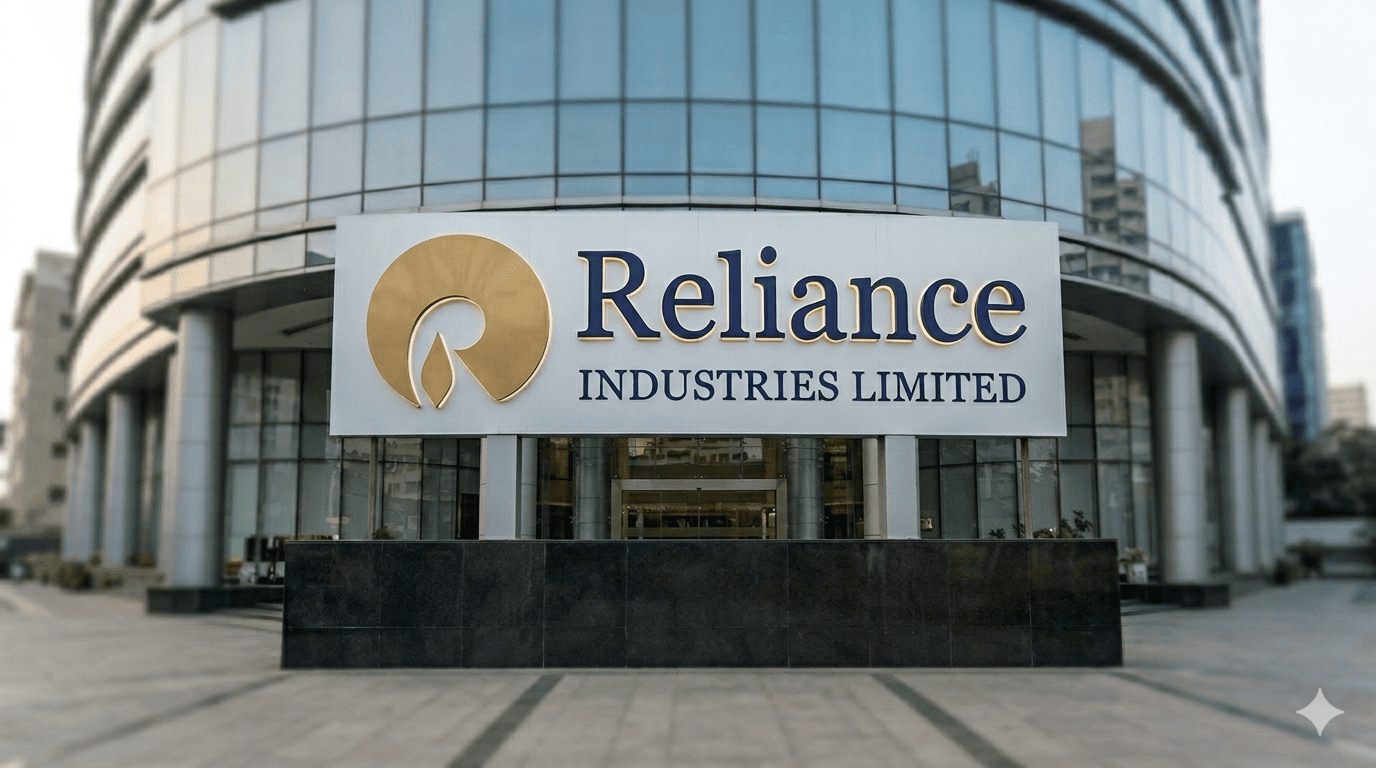
Dhirubhai Ambani started with Rs 15,000 in 1958 and a plan to trade polyester yarn. His son Mukesh has turned that seed into a company with Rs 11.76 lakh crore in annual revenue, Rs 2.08 lakh crore in annual EBITDA, and a net profit of Rs 95,610 crore crossing USD 10 billion for the first time in FY2026 — the first Indian company to reach that mark. Reliance Industries Limited today refines more oil per day than any single-site refinery in the world, operates more retail stores than any other chain in India, runs India’s largest telecom network, controls India’s dominant streaming platform, is building five gigafactories for renewable energy on 5,000 acres in Gujarat, and just signed a deal with Meta to host India’s first AI-enabled data centre in Jamnagar. This article is a sector-by-sector breakdown of how Reliance got here and where it is going next.
Rs 11.76 L Cr
FY2026 consolidated annual revenue (USD 124 billion), an all-time record for RIL, up 9.8% year-on-year. First Indian company to cross USD 10 billion in annual net profit.
524 Mn
Jio Platforms wireless subscribers as of March 2026, the largest mobile subscriber base of any single operator in India. ARPU of Rs 214 per month in Q4 FY26.
20,160
Reliance Retail stores as of March 2026, largest physical retail footprint of any retailer in India. Annual retail revenue Rs 3.70 lakh crore, up 11.8% year-on-year.
7 Sectors
Energy, Petrochemicals, Telecom, Retail, Media, Financial Services, and New Energy: the seven core verticals through which Reliance is building simultaneous market positions across the Indian economy.
Table of Contents
- The Foundation: From Yarn Trading to India’s Largest Company (1958 to 1999)
- The Energy and Petrochemicals Engine: The World’s Largest Refinery Oil-to-Chemicals strategy, Jamnagar complex, upstream exploration, and fuel retail
- Jio Platforms: Rewiring India’s Digital Infrastructure 524 million subscribers, 5G, AI, broadband, and the path to a public listing
- Reliance Retail: Cornering Every Consumption Category Grocery, fashion, electronics, beauty, FMCG brands, and hyperlocal delivery
- Media and Entertainment: JioStar and the JioHotstar Dominance
- Jio Financial Services: The Financial Superapp Ambition
- New Energy: The Jamnagar Green Gigafactory Bet
- Artificial Intelligence and Data Infrastructure: The Newest Frontier
- FY2026 Financial Summary: What the Numbers Say
- The Strategic Architecture: How Every Piece Connects
- Risks, Concentration, and Counterarguments
- Conclusion: What Reliance’s Expansion Means for India’s Economy
- Frequently Asked Questions
Part IThe Foundation: From Yarn Trading to India’s Largest Company (1958 to 1999)
The Reliance story is inseparable from the biography of Dhirubhai Hirachand Ambani. Born in 1932 in Chorwad, a small village in Gujarat’s Junagadh district, Dhirubhai left India at the age of approximately 16 to work as a clerk at A. Besse and Co., a trading and oil bunkering company in Aden (present-day Yemen). He returned to India around 1958 with approximately Rs 15,000 in savings and a plan: to exploit India’s rising middle-class demand for affordable synthetic fabrics, which the entrenched textile establishment was either unable or unwilling to serve at scale.
He established Reliance Commercial Corporation in 1958 as a trading venture, initially importing polyester yarn and exporting spices including ginger, cardamom, and turmeric to the Gulf market. The business evolved through a partnership with his cousin Champaklal Damani, which dissolved in 1965. From 1966, Dhirubhai moved from trading to manufacturing: he incorporated Reliance Textiles Industries and commissioned a synthetic fabrics mill at Naroda, near Ahmedabad in Gujarat. The Vimal brand, launched through this mill, became a household name for quality polyester fabric across India. Reliance grew through a combination of operational scale, dealer credit systems, and what Dhirubhai understood better than any contemporary: the retail shareholder as a source of capital and loyalty simultaneously.
The 1977 IPO and the Birth of the Equity Cult
In 1977, Reliance Textile Industries conducted one of India’s first and most consequential mass-market IPOs. The issue was oversubscribed seven times and introduced the concept of equity investing to hundreds of thousands of ordinary Indian households, particularly in Gujarat and Maharashtra. Dhirubhai explicitly cultivated the retail investor as a constituency: he held large annual shareholder meetings that functioned as rallies, ensuring that small investors felt personally connected to the company’s growth. This retail investor base became a structural advantage, providing Reliance with a low-cost, loyal capital pool that it used to finance increasingly ambitious industrial projects without sole dependence on institutional debt or government patronage.
Reliance was formally incorporated as Reliance Industries Limited on May 8, 1973. Through the 1980s, it moved aggressively into backward integration: establishing a polyester filament yarn plant at Patalganga in Maharashtra, a large integrated complex at Hazira in Gujarat, and expanding into purified terephthalic acid (PTA) and monoethylene glycol (MEG) production, the upstream chemicals from which polyester is made. By the early 1990s, Reliance had become the largest integrated polyester producer in India and one of the largest in the world.
The Pivot to Energy: The Jamnagar Decision
The decision that would transform Reliance from a large industrial company into a conglomerate with national infrastructure significance was made in the early 1990s: to build a private-sector oil refinery. This was an audacious ambition in an era when petroleum refining in India was the exclusive preserve of state-owned enterprises. The site selected was Jamnagar in Gujarat. Reliance Refineries Limited was established as a separate entity, which later became Reliance Petroleum Limited, and conducted its own IPO. The first refinery at Jamnagar was commissioned on July 14, 1999, with an initial crude processing capacity of 668,000 barrels per day. A second refinery was commissioned in 2008 within a Special Economic Zone adjacent to the first, adding 580,000 barrels per day. Together, the Jamnagar complex processes 1.24 million barrels per day at a single integrated site, making it the world’s largest single-location refining complex by capacity, ahead of any facility operated by Saudi Aramco, ExxonMobil, or Sinopec.
Dhirubhai Ambani suffered a stroke in 1986 and a second stroke in July 2002, leading to his death. His sons Mukesh and Anil had already assumed day-to-day leadership of different divisions. Following a period of tension between the brothers and their respective business interests, a formal demerger settlement was reached in 2005, allocating the core energy, refining, and petrochemicals businesses to Mukesh Ambani’s Reliance Industries Limited. The retail, financial services, and telecom businesses he subsequently built were entirely new additions to this energy foundation, financed by the substantial cash flows generated by the Jamnagar refinery and petrochemicals complex.
Part IIThe Energy and Petrochemicals Engine: The World’s Largest Refinery
The Oil-to-Chemicals (O2C) business remains Reliance’s largest segment by revenue. In FY2026, the O2C segment generated annual revenue of Rs 6,62,401 crore (approximately USD 69.9 billion), representing approximately 56% of consolidated group revenue. However, its relative contribution to EBITDA has been declining as the consumer-facing businesses of Jio and Retail expand, a trend Mukesh Ambani has explicitly highlighted as reflecting the intended strategic transformation of the group.
The Jamnagar Complex: Scope and Integration
The Jamnagar refinery complex covers more than 7,500 acres and processes 1.24 million barrels of crude oil per day. Refinery 1, commissioned in 1999 and serving the Indian domestic market, has nameplate capacity of 660,000 barrels per day. Refinery 2, commissioned in 2008 within a Special Economic Zone and oriented toward export markets, adds 580,000 barrels per day. The SEZ structure exempts Refinery 2’s output from Indian domestic excise obligations, enabling competitive export pricing.
What distinguishes the Jamnagar complex from comparable global refining installations is not merely its size but its depth of integration. The refinery does not merely produce petroleum products: it feeds directly into one of the world’s largest downstream petrochemical plants on the same site. The Refinery Off-Gas Cracker (ROGC), which Reliance describes as the world’s largest of its type, converts refinery waste gases into ethylene and propylene, the building blocks of plastics and polyester. This integration means that every barrel of crude oil processed at Jamnagar generates value across multiple product lines simultaneously, compressing cost per unit and providing operational flexibility that standalone refineries cannot match.
Reliance is the world’s largest integrated polyester producer and ranks among the top five global producers of purified terephthalic acid (PTA) and polypropylene (PP). It ranks third globally in paraxylene (PX) production. These positions reflect the accumulated scale of approximately six decades of backward integration from textiles into the underlying chemicals value chain.
The Oil-to-Chemicals strategic shift: Reliance is among the first companies globally to adopt what it calls an Oil-to-Chemicals (O2C) strategy, deliberately moving refinery output away from transportation fuels and toward chemical feedstocks. As electric vehicles reduce long-term demand growth for petrol and diesel, Reliance is repositioning its refinery to produce higher-value polymers, intermediates, and specialty chemicals. This is not a defensive pivot but a proactive one: the long-term demand for plastics, fibres, and specialty materials in a growing Indian economy is expected to remain robust regardless of the energy transition in the transport sector.
Upstream Exploration: KG Basin and CBM
Reliance holds exploration and production assets in India’s offshore hydrocarbon basins. Its most significant upstream asset is the KG D6 block in the Krishna-Godavari basin off India’s east coast, operated in a joint venture with BP. For FY2026, average KG D6 production was approximately 25.2 million standard cubic metres per day (MMSCMD) of gas and approximately 17,310 barrels per day of oil and condensate. The Oil and Gas segment reported annual revenue of Rs 23,861 crore for FY2026, a decrease of 5.4% year-on-year due to lower production volumes from the KG D6 block. Reliance also operates coalbed methane (CBM) fields, where output increased by approximately 30% to 0.8 MMSCMD, supported by India’s first 40-well multilateral drilling campaign.
Fuel Retail: Jio-bp
Reliance operates a fuel retail network through Jio-bp, a 50:50 joint venture with BP. As of FY2026, the Jio-bp network comprises 2,199 fuel retail outlets across India. This network is strategically positioned as a physical touchpoint in the Reliance ecosystem: Jio-bp stations serve as potential anchors for convenience retail, EV charging infrastructure, and branded consumer services, extending the group’s physical presence into the fuel retail segment that was previously dominated by state-owned oil marketing companies.
O2C Revenue FY26
Rs 6.62 L Cr
USD 69.9 billion; up 12.4% YoY in Q4 FY26 driven by higher crude prices
Refining Capacity
1.24 Mn bpd
World’s largest single-location refinery complex at Jamnagar, Gujarat
KG D6 Gas Production
25.2 MMSCMD
Average production in Q4 FY26 from KG D6 block, JV with BP
Polyester Position
World No. 1
Largest integrated polyester producer globally; Top 5 in PTA and PP; Top 3 in PX
Jio-bp Fuel Outlets
2,199
50:50 JV with BP; fuel retail network as of March 2026
O2C Share of Group Revenue
~56%
Declining as consumer businesses (Jio, Retail, Media) expand share of EBITDA
Part IIIJio Platforms: Rewiring India’s Digital Infrastructure
Jio Platforms Limited (JPL) is the holding company for Reliance’s digital and telecommunications businesses, including Reliance Jio Infocomm Limited (the telecom operator), JioCinema (now merged into JioHotstar), JioSaavn, JioMart, and a suite of digital applications. Jio launched commercial telecom services on September 5, 2016, and has been covered extensively in FiscalZenith’s dedicated analysis of the Jio pricing strategy. This section focuses on Jio’s current position and forward trajectory as of June 2026.
Scale and Financial Position as of FY2026
As of March 31, 2026, Jio Platforms reported a total wireless subscriber base of 524.4 million, the largest of any mobile operator in India. The ARPU (Average Revenue Per User) for Q4 FY26 was Rs 214 per month, up 3.8% year-on-year, reflecting the continued flow-through of the July 2024 tariff hike and the August 2025 entry-level plan discontinuation. Jio AirFiber, the platform’s fixed wireless access service, had approximately 13 million home connections as of March 2026, making it the largest fixed wireless access provider globally. More than 75% of India’s fixed broadband additions during FY2026 were contributed by Jio AirFiber.
For the full year FY2026, Jio Platforms reported full-year revenue of Rs 1,72,317 crore (up approximately 14.5% year-on-year) and full-year EBITDA of Rs 76,255 crore (up 19% year-on-year), with full-year PAT of Rs 30,053 crore (up approximately 15% year-on-year). For Q4 FY26 specifically, Jio revenue from operations was Rs 44,929 crore (up 12.7% year-on-year) and EBITDA was Rs 20,060 crore (up 17.9% year-on-year), with an EBITDA margin of 52.4%, up 230 basis points year-on-year. The EBITDA margin of above 50% makes Jio one of the most profitable telecom operators in Asia on this metric. Jio’s PAT for Q4 FY26 was Rs 7,935 crore, up 13% year-on-year. Consumer businesses including Jio and Retail together contributed over 55% of RIL’s total EBITDA in FY2026 for the first time, marking a structural inflection point in the group’s revenue mix.
5G Rollout and Data Consumption
Jio launched 5G services commercially in October 2022 and achieved a nationwide 5G footprint by December 2023. As of March 2026, Jio had approximately 268 million 5G subscribers, the largest 5G user base of any operator outside China. Average data consumption per Jio user stood at 42.3 GB per month in Q4 FY26, one of the highest in the world for any major telecom operator. This consumption level reflects both the affordability of Jio’s data plans and the depth of digital integration Jio has achieved among its subscriber base. Jio commands an all-India revenue market share of approximately 43%. 5G now accounts for approximately 55% of Jio’s own wireless data traffic in Q4 FY26; total data traffic reached 66 billion GB (up 35% YoY).
The Jio Platforms IPO: Advancing Steadily
One of the most anticipated corporate events in Indian market history is the proposed initial public offering of Jio Platforms. Mukesh Ambani confirmed at the Q4 FY26 results announcement in April 2026 that the Jio Platforms IPO was “advancing steadily,” with draft papers likely to be filed soon. A listing of Jio Platforms would create one of the largest technology company IPOs in Indian history, potentially valuing the digital services business independently of Reliance Industries’ O2C and other legacy assets. The significance of this event for Indian capital markets cannot be overstated: Jio Platforms attracted a combined total of approximately $20 billion in strategic investments between 2020 and 2021 from investors including Facebook (now Meta, at $5.7 billion), Google ($4.5 billion), Silver Lake, Vista Equity Partners, KKR, Abu Dhabi Investment Authority, Mubadala, and Saudi Arabia’s Public Investment Fund, among others. These investments established a valuation benchmark for the platform’s digital assets that an IPO would test in public markets.
Jio Platforms: Key Metrics as of FY2026
Wireless subscribers (March 2026)524.4 million
Q4 FY26 ARPURs 214 per month (up 3.8% YoY)
5G subscribers (March 2026)268 million
JioAirFiber home connections~13 million (>75% of India’s FBB net adds)
Q4 FY26 revenue from operationsRs 44,929 crore (up 12.7% YoY)
Q4 FY26 EBITDARs 20,060 crore (margin 52.4%, up 230 bps YoY)
Q4 FY26 PATRs 7,935 crore (up 13% YoY)
FY26 full-year revenueRs 1,72,317 crore (up ~14.5% YoY)
FY26 EBITDA growth19% YoY (full year); FY26 PAT Rs 30,053 crore (up ~15% YoY)
IPO status (as of April 2026)Advancing steadily; DRHP filing anticipated
Part IVReliance Retail: Cornering Every Consumption Category
Reliance Retail Ventures Limited (RRVL) is India’s largest retailer by revenue and store count. It operates across four primary consumption categories: grocery and consumer staples, fashion and lifestyle, consumer electronics, and beauty and personal care. Within each category it operates multiple formats, brands, and digital channels, creating a comprehensive retail presence that spans organised retail in India from the mass market to the premium tier.
Scale and Financial Performance
For FY2026, Reliance Retail achieved annual revenue of Rs 3,70,026 crore, up 11.8% year-on-year. EBITDA for the full year grew approximately 7.7% year-on-year. The business added 1,564 new stores during FY2026, bringing the total store count to 20,160 as of March 2026, spanning approximately 78.3 million square feet of retail area. The registered customer base reached 387 million by March 2026. Annual transactions processed by the retail business crossed 1.93 billion in FY2026, a significant expansion from 1.4 billion in FY2025.
In Q1 FY26 (April to June 2025), Reliance Retail reported net revenue growth of 11.3% year-on-year to Rs 73,720 crore, with EBITDA up 12.7% year-on-year and an EBITDA margin of 8.7%. JioMart’s hyperlocal delivery service saw daily orders grow 68% quarter-on-quarter and 175% year-on-year in Q1 FY26, reflecting the rapid acceleration of quick-commerce capabilities within the Reliance ecosystem.
Format Architecture: How Reliance Covers Every Price Point
Reliance Retail’s strategic design ensures coverage of every income segment and consumption category within India’s organised retail market. In grocery, Reliance Fresh serves neighbourhood needs, Reliance Smart is a mid-format hypermarket, and Reliance Market serves wholesale and business customers through a cash-and-carry model. In fashion and lifestyle, Trends is the mass-market format, Yousta targets value-conscious young consumers, and Azorte is positioned as a premium fashion destination. Tira is its beauty and personal care retail concept. In consumer electronics, Reliance Digital is the flagship large-format store, and MyJio Stores serve as branded retail points for Jio products and services. This multi-format, multi-segment architecture means that a consumer at any income level, shopping for any category, encounters a Reliance format as one of their primary options.
Digital Commerce: AJIO and JioMart
Reliance Retail’s digital commerce operations are built around two primary platforms. AJIO is its fashion and lifestyle e-commerce platform, competing with platforms such as Myntra and Nykaa Fashion. JioMart is the grocery and general merchandise platform, integrating online ordering with fulfilment through Reliance’s physical store network and a growing hyperlocal delivery infrastructure. JioMart processed daily orders at a rate showing greater than 300% year-on-year growth in Q4 FY26, reflecting the rapid expansion of its quick-commerce model as Reliance moved aggressively into the competitive hyperlocal delivery market during FY2026.
FMCG Brand Building
Beyond its role as a retailer of other companies’ products, Reliance Retail has accelerated investment in building its own portfolio of FMCG brands. The consumer products vertical, which operates as an independent organisational structure within Reliance Retail, launched and expanded multiple proprietary brands in FY2026, spanning food products, personal care, and home care categories. This is a significant strategic development: a retailer that also manufactures its own brands can drive higher margins, control shelf space, and reduce dependence on external suppliers simultaneously. Isha Ambani, Executive Director of RRVL, highlighted this portfolio development as a key priority at RIL’s FY2026 results announcement.
Grocery and Staples
Reliance Fresh, Smart, Market, JioMart
Covers neighbourhood convenience, mid-format hypermarkets, wholesale cash-and-carry, and digital grocery with hyperlocal delivery. Market-leading performance cited in FY26 results.
Fashion and Lifestyle
Trends, Yousta, Azorte, AJIO
Mass to premium fashion across physical and digital. AJIO is a scaled fashion e-commerce platform. Private label penetration increasing across all formats.
Consumer Electronics
Reliance Digital, MyJio Stores
Large-format electronics retail and branded Jio product outlets. Electronics impacted by early monsoon onset in Q1 FY26 but recovered in subsequent quarters.
Beauty and Personal Care
Tira Beauty
Launched as a premium beauty destination competing with Nykaa’s physical stores and international beauty chains. Expanding store count and digital platform simultaneously.
International Brands
Shein (India relaunch), other licensed brands
Reliance Retail relaunched Shein in India through a licensing agreement, offering over 12,000 options via its platform, extending its fashion category reach into the fast-fashion segment.
Own FMCG Portfolio
Consumer Products Vertical
Independent organisational structure building proprietary FMCG brands in food, personal care, and home care. Called out as a key focus area in Mukesh and Isha Ambani’s FY26 statements.
Part VMedia and Entertainment: JioStar and the JioHotstar Dominance
Reliance’s media and entertainment strategy reached its logical culmination on February 14, 2025, when JioCinema and Disney+ Hotstar merged to form JioHotstar under the JioStar joint venture. JioStar is a joint venture between Reliance Industries (through Viacom18) and The Walt Disney Company (through Star India), valued at approximately USD 8.5 billion. Nita Ambani serves as chairperson and Uday Shankar as vice-chair.
JioStar controls the most comprehensive media portfolio in India. On the broadcast television side, it holds the Colors TV family of channels, Star Plus, Star Sports, the Star Movies suite, Star Gold, regional language channels across Bengali, Marathi, Tamil, Telugu, Kannada, and Malayalam markets, MTV India, Nickelodeon India, and National Geographic India. On the streaming side, JioHotstar had averaged 500 million monthly active users during Q4 FY26, and holds digital rights to IPL from 2023 to 2027, ICC cricket events, the Premier League, Wimbledon, and a content library spanning HBO, Warner Bros. Discovery, NBCUniversal Peacock, Paramount, Disney, and Marvel. The T20 Men’s Cricket World Cup final achieved a record concurrent viewership during Q4 FY26 on the JioHotstar platform.
For FY2026, the Media and Entertainment segment reported Q4 gross revenue of Rs 9,784 crore with EBITDA of Rs 827 crore (EBITDA margin 9.9%). The full year FY2026 operating revenue for JioHotstar was Rs 31,048 crore with a profit before tax of Rs 3,228 crore. JioHotstar averaged 500 million monthly active users during Q4 FY26 and reached 550 million MAUs in March 2026. The ICC Men’s T20 World Cup 2026 (held February 7 to March 8, 2026 across India and Sri Lanka) delivered a peak concurrent viewership of 72.5 million on JioHotstar during the India-New Zealand final on March 8, 2026, the highest ever recorded for any live digital event globally. JioStar retained a 34.2% television entertainment viewership share and reached over 810 million viewers across India in Q4 FY26.
Why media matters beyond entertainment: Reliance’s media dominance is not purely a commercial bet. It is infrastructure for the attention economy. A company that controls what 500 million Indians watch, which cricket matches they stream, which TV series they follow, and which news they consume holds an unparalleled capacity to shape consumer awareness of its own products across retail, financial services, and digital services. The cross-promotion and advertising efficiency available to a conglomerate that owns both the consumer brands and the media platforms on which they advertise is structurally unavailable to competitors who must buy media access at market rates.
Part VIJio Financial Services: The Financial Superapp Ambition
Jio Financial Services Limited (JFSL) was demerged from Reliance Industries and listed independently on the NSE and BSE on August 21, 2023, under the ticker JIOFIN. The demerger transferred Reliance’s financial services subsidiary, originally incorporated in 1999 as Reliance Strategic Investments Private Limited, into a separately listed entity with a significant initial endowment of cash and liquid assets. At demerger, JFSL received an asset transfer valued at approximately Rs 15,500 to Rs 20,700 crore from Reliance Industries.
JFSL operates as a Core Investment Company and a Non-Banking Financial Company (NBFC) registered with the Reserve Bank of India. It operates financial services through consumer-facing subsidiaries: Jio Finance Limited (NBFC lending), Jio Insurance Broking Limited, Jio Payment Solutions Limited, and Jio Leasing Services. Jio Payments Bank, in which JFSL holds a 77% stake following its acquisition of the State Bank of India’s stake in 2025, operates as a payments bank providing zero-balance savings accounts, digital payment solutions, debit cards, and domestic money transfer services.
Growth Trajectory
JFSL has demonstrated accelerating growth from a low base. In Q2 FY26 (July to September 2025), total income was Rs 1,002 crore, compared to Rs 694 crore in Q2 FY25. Net income from business operations stood at Rs 317 crore in Q2 FY26, five times the level of Q2 FY25. Jio Credit, the NBFC arm, reported assets under management (AUM) of Rs 14,712 crore in Q2 FY26, up approximately 12 times year-on-year, driven by secured lending products spanning retail and corporate segments. The transaction processing value of Jio Payment Solutions rose to Rs 13,566 crore in Q2 FY26, up 167% year-on-year. Jio Payments Bank’s business correspondent network grew from 2,307 in Q2 FY25 to approximately 200,000 by Q2 FY26.
Insurance and Asset Management
In the insurance space, JFSL has pursued a multi-pronged strategy. Allianz Jio Reinsurance Limited, a 50:50 joint venture between JFSL and Allianz SE of Germany, was incorporated in September 2025 and received its Certificate of Registration from the Insurance Regulatory and Development Authority of India (IRDAI) on March 12, 2026, commencing reinsurance operations immediately. JFSL is also pursuing IRDAI approvals for direct insurance manufacturing licenses in both life and general insurance categories, targeting launch in 2026. In asset management, JFSL formed a 50:50 joint venture with BlackRock in late 2023 to enter the Indian mutual fund market. The BlackRock-Jio Financial JV received regulatory approvals and has launched mutual fund schemes, positioning JFSL as a participant in India’s rapidly growing asset management industry.
The Strategic Logic of Financial Services
The strategic logic behind JFSL is identical to the logic behind Jio telecom in 2016: use an existing, massive captive user base (524 million Jio telecom subscribers, 387 million Reliance Retail customers, 500 million JioHotstar users) to distribute financial products at dramatically lower customer acquisition cost than traditional banks or insurers can achieve. An NBFC that can originate home loans through the JioMart app, distribute insurance through Reliance Digital stores, offer mutual funds through the JioFinance superapp, and collect payments through Jio Payment Solutions has a distribution architecture that no pure-play financial services firm in India can replicate without building from scratch across four separate categories.
Part VIINew Energy: The Jamnagar Green Gigafactory Bet
Reliance’s New Energy business represents its largest single greenfield capital commitment since the original Jamnagar refinery. Mukesh Ambani announced in 2021 a Rs 75,000 crore (approximately USD 10 billion) investment in new energy over a three-year period, centred on the Dhirubhai Ambani Green Energy Giga Complex in Jamnagar, Gujarat. The complex is being built on approximately 5,000 acres adjacent to the existing refinery and petrochemical facilities.
The Dhirubhai Ambani Green Energy Giga Complex
The Jamnagar complex will house five gigafactories for five distinct but integrated product categories: solar photovoltaic modules, advanced energy storage batteries, electrolysers for green hydrogen production, fuel cells, and power electronics. The construction scale is without precedent in India’s industrial history. As reported at RIL’s AGM in August 2025 by Anant Ambani, the complex spans 44 million square feet of built-up area, equivalent to approximately four times the floor area of the Tesla Gigafactory in Nevada. Construction has consumed approximately 3.4 million cubic metres of concrete, 7 lakh tonnes of steel (equivalent in mass to approximately 100 Eiffel Towers), and 1 lakh kilometres of cable, with over 50,000 workers engaged at peak construction periods.
Current Status as of June 2026
The solar photovoltaic manufacturing facility is operational. It has successfully produced the first 200 megawatts (MW) of high-efficiency heterojunction technology (HJT) solar modules, which Reliance reports deliver 10% higher energy yield, 20% better temperature tolerance, and 25% lower degradation compared to standard modules. The battery gigafactory is scheduled to begin operations in 2026 with an initial annual capacity of 40 gigawatt-hours (GWh) of cell-to-pack manufacturing, scalable to 100 GWh per annum modularly by 2030. The electrolyser gigafactory is also scheduled to start production by the end of 2026, with capacity scalable to 3 gigawatts per year, enabling green hydrogen production that Reliance targets to scale to 3 million metric tonnes per annum (MMTPA) of green hydrogen and derivatives by 2032.
In Kutch, Gujarat, Reliance is additionally developing one of the world’s largest single-site solar projects spanning 5,50,000 acres of arid land, intended to generate the renewable electricity needed to power both its gigafactories and its green hydrogen production. The complex in Jamnagar is designed to be the world’s only fully integrated new energy company, with solar, battery storage, and green hydrogen production under one roof powered by on-site renewable generation. Goldman Sachs estimated, in its early 2026 analysis of RIL, that the rollout of new energy capacities beginning in 2026 including 10 GW of integrated solar and 30 GWh of battery pack and cell assembly would contribute to improved cash returns on capital by FY2027.
Why the new energy bet matters for the O2C business: Reliance’s green energy ambition is not simply a separate business line. It is a structural hedge for the O2C division. As India’s economy decarbonises over the next two to three decades, demand for petroleum-based transportation fuels will face structural pressure. A Reliance that can supply green hydrogen for industrial decarbonisation, battery storage for the grid and for electric vehicles, and low-cost solar modules for installation across India’s renewable energy buildout has positioned itself to participate in the replacement of the very energy economy it currently dominates. This is the most ambitious long-cycle capital allocation in the company’s history.
Part VIIIArtificial Intelligence and Data Infrastructure: The Newest Frontier
Reliance’s push into artificial intelligence and data centre infrastructure is the most recently initiated but fastest-moving dimension of its expansion. The convergence of three factors has made this a logical frontier: Jio’s 524 million-subscriber telecom network generates an unprecedented volume of Indian consumer data, the Jamnagar complex is building gigawatt-scale renewable energy capacity that can power energy-intensive data centres at low cost, and India’s digital economy, which Reliance estimates at USD 0.5 trillion in 2025 and projects to cross USD 1 trillion by 2030, requires the AI infrastructure to function.
Jio Brain and the AI-Cloud Ecosystem
At its 47th Annual General Meeting in August 2024, Mukesh Ambani unveiled Jio Brain: a suite of AI tools and a platform designed to streamline AI adoption across Jio’s operations and, progressively, across other Reliance operating companies. Jio Brain is described as enabling faster decisions, more accurate predictions, and better customer understanding through AI-powered analytics. Jio launched a Jio AI-Cloud Welcome Offer providing Jio subscribers access to up to 100 GB of free cloud storage, establishing a consumer AI-cloud product in the market.
Ambani announced at the same AGM that Reliance plans to establish gigawatt-scale AI-ready data centres in Jamnagar, powered entirely by the complex’s renewable energy generation. The strategic rationale is explicit: by combining low-cost renewable electricity from the solar gigafactory with India’s scale of digital demand, Reliance aims to create the world’s lowest AI inferencing cost in India, making AI applications accessible at a price point that no other country or operator can match.
The Meta Partnership: June 2026
On June 10, 2026, Reliance and Meta Platforms announced a landmark partnership: Meta will lease capacity at Reliance’s new Jamnagar data centre facility for India’s first AI-enabled data centre operated by Meta. The data centre has a capacity of 168 megawatts and will be powered by renewable energy and cooled using desalinated seawater. This announcement followed and expanded upon the companies’ deepening relationship, which includes Meta’s USD 5.7 billion investment in Jio Platforms in 2020, and a USD 100 million joint venture (70% Reliance, 30% Meta) established in 2025 to develop enterprise AI platforms and tools for customers in India and internationally. The Meta-Reliance AI data centre partnership was announced just two days before this article’s publication date of June 12, 2026.
Global Technology Partnerships
Reliance’s AI strategy is built on a network of global technology partnerships rather than purely on organic development. Reliance Intelligence has partnered with Google to offer Jio subscribers complimentary access to Google AI Pro services, including Gemini AI tools, embedding Google’s AI capabilities into the Jio consumer ecosystem. Reliance Enterprise Intelligence, the joint venture with Meta, develops AI platforms and tools for Indian and international enterprise clients. Microsoft Azure is deployed in Jio’s data centre infrastructure under a partnership announced in 2019. These partnerships collectively give Reliance access to global AI capabilities, which it combines with its unique advantages: India’s largest subscriber data set, lowest-cost renewable energy in a major data centre location, and physical distribution through 524 million telecom users, 20,160 retail stores, and 500 million JioHotstar users.
The data flywheel advantage: The competitive advantage Reliance holds in AI is not computational: it does not build foundation models and does not have the GPU infrastructure that OpenAI, Google, or Microsoft operate. Its advantage is data distribution and inference. When Jio Brain runs an AI recommendation across 524 million subscribers, or when a Reliance Retail algorithm personalises pricing for 387 million registered customers, or when JioHotstar personalises content for 500 million monthly active users, Reliance operates at a scale of real-world Indian consumer data that no other entity in India commands. The AI infrastructure being built in Jamnagar is designed to serve this data at the lowest possible inference cost, with Meta, Google, and Microsoft providing the model layer.
Part IXFY2026 Financial Summary: What the Numbers Say
Reliance Industries reported record financial results for the full year ended March 31, 2026, marking several historical milestones simultaneously.
RIL FY2026 Full Year Consolidated Results
Annual Consolidated RevenueRs 11,75,919 crore (USD 124 billion, up 9.8% YoY)
Annual Consolidated EBITDARs 2,07,911 crore (USD 21.9 billion, up 13.4% YoY)
Annual PAT (attributable to owners of company)Rs 95,610 crore (USD 10.1 billion, up 18.3% YoY)
Annual Cash ProfitsRs 1,71,258 crore (up 16.6% YoY)
Capital Expenditure FY26Rs 1,44,271 crore (USD 15.2 billion)
Cash and Cash Equivalents (March 2026)Rs 2,49,704 crore
Dividend per share declaredRs 6 per share (approved)
Key milestoneFirst Indian company to cross USD 10 billion annual net profit
Segment Contribution to FY2026 EBITDA
Approximate Segment EBITDA Contribution, FY2026 (illustrative share)
The most significant shift in FY2026 is that consumer-facing businesses, specifically Digital Services and Retail along with Media, contributed over 55% of group EBITDA for the first time, exceeding the contribution of energy and petrochemicals. This is the structural transition Mukesh Ambani has been orchestrating for fifteen years: from an energy conglomerate with a consumer division to a consumer conglomerate with an energy foundation. The energy businesses provide the stable cash generation and balance sheet strength that fund consumer expansion; the consumer businesses provide the growth, the brand, and the ecosystem lock-in that create durable competitive moats.
Part XThe Strategic Architecture: How Every Piece Connects
Reliance’s expansion across sectors is not diversification in the traditional corporate sense, where a company deploys surplus capital into unrelated businesses to smooth earnings. It is systematic integration: each new business line creates demand for, or lowers the cost of, the other business lines. Understanding this architecture is essential to understanding why Reliance’s competitive position is qualitatively different from that of any other Indian conglomerate.
The Customer Acquisition Flywheel
Reliance acquires customers through one business and retains them across multiple others. A consumer who joins Jio for a Rs 79 per month mobile plan becomes a Jio subscriber. That subscriber can then access JioMart for grocery delivery, JioHotstar for streaming, the JioFinance app for a home loan, Tira for cosmetics, AJIO for fashion, and Reliance Digital for electronics. Each product purchase generates data about that consumer’s preferences, income level, spending patterns, and life stage. That data is used to personalise offers, reduce credit risk, and price products more precisely. The consumer, in turn, faces increasing switching friction with each additional Reliance service adopted, because porting out of Jio means losing the discount bundled into the recharge, the integrated JioMart delivery, and the embedded financial products.
This flywheel was first demonstrated in telecom. Jio’s free data in 2016 and 2017 acquired 100 million subscribers in 170 days. Once acquired, those subscribers generated the audience for JioCinema and JioTV. The JioCinema audience became the customer base for JioHotstar’s paid subscription model after 2025. The JioHotstar audience is the target market for Jio Financial Services’ insurance and mutual fund products. Each stage of the flywheel is funded by the revenue of the previous stage.
The Infrastructure Moat
Reliance’s physical infrastructure creates barriers that cannot be replicated on a commercially rational timeline. The Jamnagar refinery complex took years to build at a cost that would run into tens of billions of dollars at today’s construction prices: no competitor will build a comparable facility. The Jio 5G network, built on spectrum acquired across all 22 telecom circles with the largest single spectrum holding of any Indian operator, cost approximately Rs 2 lakh crore in 5G capital expenditure. The Reliance Retail store network of 20,160 outlets across approximately 78.3 million square feet required decades of lease negotiations, supply chain development, and local regulatory approvals. The Dhirubhai Ambani Green Energy Giga Complex, on 5,000 acres in Jamnagar, is four times the floor area of the Tesla Gigafactory and took years of engineering and construction. Individually, each of these assets is difficult to replicate. Together, they constitute a platform that is essentially unreplicable in the medium term.
The Balance Sheet Strength
Reliance holds cash and cash equivalents of Rs 2,49,704 crore as of March 2026. Its capital expenditure for FY2026 was Rs 1,44,271 crore, fully funded by internal cash flows. This means Reliance is investing more than Rs 1.44 lakh crore per year in growth without requiring external financing, while simultaneously maintaining a cash balance large enough to absorb most acquisition opportunities in any sector. This financial position gives it a structural advantage in entering new markets: it can afford to price aggressively, operate at a loss for extended periods, and absorb market shocks that would force under-capitalised competitors to retreat. The free-data launch of Jio in 2016 was only possible because the O2C business was generating sufficient cash to fund a multi-year period of near-zero telecom revenue.
Strategic Pillar 1
Own the Infrastructure Layer
Spectrum, refinery capacity, renewable energy generation, retail real estate, and AI data centre capacity are infrastructure that competitors must either access through Reliance or build independently at prohibitive cost and timeline. Owning the infrastructure layer creates structural pricing power in each market Reliance enters.
Strategic Pillar 2
Penetrate at Zero or Below Market Price
Jio in 2016, JioCinema IPL 2023, Jio AI-Cloud free storage, and JioMart hyperlocal delivery subsidies all follow the same pattern: enter a market at a price that forces competitors to either match (destroying their margins) or cede the market. Reliance’s energy cash flows fund this penetration strategy in consumer markets.
Strategic Pillar 3
Convert Free Users to Paid Subscribers
Free access creates habit and switching costs. Jio converted free 2016 users to paid 2017 subscribers. JioCinema converted free IPL 2023 viewers to JioHotstar paid subscribers in 2025. JioMart is converting free-delivery trial users to recurring hyperlocal customers. Each conversion creates a revenue stream and deepens ecosystem lock-in.
Strategic Pillar 4
Use Data Across the Ecosystem
524 million telecom subscribers, 387 million retail customers, 500 million JioHotstar users, and growing Jio Financial Services customers collectively generate a data asset about Indian consumer behaviour that is unmatched by any private sector entity in the country. AI tools including Jio Brain are the mechanism for converting this data into operational advantage and personalised product offerings.
Strategic Pillar 5
Build for the Next Decade, Not the Next Quarter
The Jamnagar Green Energy Giga Complex will not generate material revenue until the late 2020s. The Jio Platforms IPO, when it occurs, will value assets built over a decade of losses before profitability. The financial services and AI infrastructure bets are multi-year investments. Reliance’s energy cash flows provide the runway to think in decade-long cycles rather than quarterly earnings cycles.
Strategic Pillar 6
Partner Globally, Compete Locally
Reliance has partnered with Meta, Google, Microsoft, BP, BlackRock, Allianz, Disney, and dozens of global technology and energy companies. These partnerships give it access to global technology, content, and capital while keeping competitive positioning in India under Reliance’s control. Foreign partners get India access; Reliance gets global capability and validation.
Part XIRisks, Concentration, and Counterarguments
An honest assessment of Reliance’s expansion requires engaging seriously with the risks and structural concerns that its scale and strategy generate, both for the company and for the broader economy it is expanding within.
Concentration of Economic Power
The most significant systemic concern is the degree to which a single privately owned conglomerate is building simultaneous positions across infrastructure sectors that have historically been the domain of competitive markets or state enterprises. Reliance operates the world’s largest refinery, India’s largest telecom network, India’s largest retailer, India’s dominant streaming platform, and is now building India’s largest renewable energy manufacturing complex and the first major AI data centre to host a global hyperscaler. Each of these positions, considered individually, is the result of legitimate investment and competitive execution. Considered together, they raise questions about the degree to which Reliance’s financial power allows it to set market conditions rather than respond to them. The November 2021 and July 2024 telecom tariff hikes, in which Jio, Airtel, and Vodafone Idea moved prices upward in close proximity to each other, illustrated the market dynamics that emerge when an industry has consolidated from thirteen operators to three.
O2C Business Vulnerability
The O2C segment, which still generates approximately 56% of group revenue, faces structural headwinds from two directions simultaneously. Globally, the energy transition is expected to reduce demand growth for petroleum-based transportation fuels over the next two to three decades. In the near term, refining margins are subject to significant volatility, as demonstrated by the weakness in Q4 FY26 when geopolitical disruptions in West Asia raised crude costs and suppressed transportation fuel cracks. RIL’s Q4 FY26 net profit fell 13% year-on-year specifically because O2C margin compression offset the strong growth in digital and retail. The O2C business’s shift to chemicals reduces but does not eliminate this cyclical exposure.
Execution Risk in New Energy
The Rs 75,000 crore new energy investment is the largest single capital commitment in Reliance’s history. The gigafactories at Jamnagar are being built at a time when global solar module prices are depressed due to massive Chinese overcapacity, which compresses near-term margins for any new entrant in solar manufacturing. Battery gigafactory economics depend on lithium supply chains that are subject to geopolitical uncertainty. Green hydrogen remains a technology in commercial infancy globally, with demand dependent on policy support and infrastructure development that is still in early stages in India. Reliance’s integrated approach and low-cost renewable electricity position it competitively, but the execution timeline and economics of these businesses carry meaningful uncertainty that the O2C business, with its decades of operational experience, does not.
Regulatory and Political Risk
A company of Reliance’s scale and cross-sector reach is inevitably subject to regulatory attention in each of its markets. In telecom, TRAI’s jurisdiction over tariffs and interconnect creates potential constraints on pricing strategy. In retail, competition from the e-commerce operations of Amazon India and Flipkart (owned by Walmart) is subject to ongoing regulatory debate over FDI in multi-brand retail. In financial services, RBI and IRDAI oversight of JFSL’s NBFC and insurance ambitions creates compliance requirements and approval timelines. In media, TRAI and MIB oversight of broadcasting and digital content creates potential constraints on JioHotstar’s market position. Managing this regulatory complexity across seven sectors simultaneously requires a degree of institutional capacity and government relationship management that itself constitutes a barrier to entry for smaller competitors.
Succession and Concentration of Leadership
Reliance is closely associated with Mukesh Ambani as chairman and managing director. The next generation of Ambani family leadership is actively being integrated into the business: Akash Ambani is chairman of Reliance Jio Infocomm, Isha Ambani is executive director of Reliance Retail Ventures, and Anant Ambani is executive director of Reliance Industries with responsibility for the new energy business. This transition is occurring in a structured and visible manner. Nevertheless, the concentration of strategic vision in a single family and, historically, in a single individual represents a governance consideration that institutional investors evaluate when assessing the long-term risk profile of the group.
ConclusionWhat Reliance’s Expansion Means for India’s Economy
An Analytical Conclusion: The Reliance Paradox
Reliance Industries presents what one might call the Reliance Paradox: it is simultaneously India’s most powerful engine of consumer welfare improvement and its most formidable instrument of economic concentration. These two things are not contradictory. They are the same phenomenon viewed from different vantage points, and resolving that tension is the defining challenge for Indian policymakers and markets over the next decade.
Consider what Reliance has actually delivered. Before Jio, mobile data cost Rs 200 to Rs 300 per gigabyte and 81% of India’s 936 million telecom subscribers had no meaningful internet access. Today, data costs Rs 10 to Rs 15 per gigabyte effectively, internet penetration has risen from 26% to over 60%, and India’s average monthly data consumption per user is among the highest in the world. Before Reliance Retail, organised grocery and fashion retail were concentrated in large cities and served primarily upper-income consumers. Today, Reliance operates 20,160 stores across India, processes 1.93 billion transactions annually from 387 million registered customers, and is actively pushing into hyperlocal delivery for the next tier of consumer. Before the Jamnagar refinery, India was a net importer of petroleum products. Today it is a net exporter, and Reliance’s refinery complex underpins India’s energy security in a way that no other single private-sector asset does.
These are genuine contributions to Indian consumer welfare, economic infrastructure, and national self-sufficiency. They are not incidental to Reliance’s commercial strategy; they are achieved through the execution of that strategy. Dhirubhai Ambani’s original insight was that serving the mass Indian consumer at scale was a legitimate route to industrial wealth, and Mukesh Ambani has applied that insight to every sector the group has entered.
The paradox arises because the same scale that delivers consumer benefit also creates market conditions that reduce the competitive alternatives available to those consumers and the businesses that compete with Reliance. When a single company controls the data pipe (Jio telecom), the storefront (Reliance Retail), the content channel (JioHotstar), the payment rail (Jio Payment Solutions), the lending product (Jio Finance), and the energy source (Jamnagar refinery plus new energy gigafactory), the boundary between a competitive market and a regulated utility becomes genuinely unclear. This is not a criticism unique to Reliance: Amazon in the United States, Alibaba in China, and Meta in social media have all generated the same structural question in their respective markets. India’s distinction is that a single conglomerate is pursuing this integration across physical infrastructure, digital services, financial services, and energy simultaneously, in a market of 1.4 billion people that is growing faster than any comparably sized economy in the world.
The FY2026 results are a financial milestone marker for this expansion. Revenue of Rs 11.76 lakh crore, EBITDA of Rs 2.08 lakh crore, net profit of Rs 95,610 crore, capital expenditure of Rs 1.44 lakh crore, and cash reserves of Rs 2.49 lakh crore constitute a balance sheet that gives Reliance the capacity to continue investing simultaneously in five-gigafactory green energy complexes, nationwide 5G infrastructure upgrades, AI data centres for global hyperscalers, hyperlocal retail delivery, and financial superapp development, without requiring external financing for any of them. The question is not whether Reliance can continue to expand. The question is whether India’s market and regulatory frameworks will evolve fast enough, and with sufficient sophistication, to preserve competitive dynamics that serve the long-term interest of Indian consumers and businesses alongside the near-term consumer benefits that Reliance’s scale undeniably delivers.
What is beyond analytical dispute is that the story is far from finished. The Jio Platforms IPO will mark a new chapter in Indian capital markets. The green energy gigafactories will begin generating commercial revenue from late 2026 and onward. The Meta AI data centre in Jamnagar, announced two days before this article’s publication, signals that Reliance is positioning itself as the infrastructure backbone of India’s AI economy just as it positioned itself as the infrastructure backbone of India’s digital economy in 2016. The succession of the Ambani children across Jio, Retail, and New Energy is proceeding in a structured and public manner. Each of these threads, when they converge over the next five to ten years, will determine whether Reliance Industries remains an Indian company of extraordinary scale or becomes something qualitatively different: a platform on which a significant fraction of India’s economy functions.
That is the ambition embedded in the numbers. It is the reader’s own judgement whether it is a prospect to welcome, to scrutinise, or to do both simultaneously.
Frequently Asked Questions
Reliance Industries reported record consolidated annual revenue of Rs 11,75,919 crore (USD 124 billion) for FY2026 (year ended March 31, 2026), up 9.8% year-on-year. EBITDA for the full year was Rs 2,07,911 crore (USD 21.9 billion), up 13.4% year-on-year. Profit after tax attributable to shareholders was Rs 95,610 crore (USD 10.1 billion), up 18.3% year-on-year. Mukesh Ambani noted at the results announcement that RIL had become the first Indian company to cross USD 10 billion in annual net profit. Annual cash profits were Rs 1,71,258 crore, up 16.6% year-on-year. Capital expenditure for FY2026 was Rs 1,44,271 crore. Cash and cash equivalents as of March 31, 2026 stood at Rs 2,49,704 crore.
Dhirubhai Hirachand Ambani returned to India from Aden around 1958 and established Reliance Commercial Corporation as a trading business focused on polyester yarn imports and spice exports to Gulf markets, initially in partnership with his cousin Champaklal Damani. The partnership was dissolved in 1965. In 1966, Dhirubhai established Reliance Textiles Industries and commissioned a synthetic fabrics mill at Naroda near Ahmedabad in Gujarat, launching the Vimal brand of polyester fabrics. The company was formally incorporated as Reliance Industries Limited on May 8, 1973. The 1977 IPO of Reliance Textile Industries was oversubscribed seven times and is credited with creating one of India’s first mass equity investor cultures. After Dhirubhai Ambani’s death in 2002 and a 2005 demerger settlement between his sons Mukesh and Anil, Mukesh Ambani-led Reliance Industries retained the core energy, petrochemicals, and refining businesses, from which the retail, telecom, and financial services expansions were subsequently funded.
The Dhirubhai Ambani Green Energy Giga Complex is a large-scale renewable energy manufacturing campus being developed by Reliance Industries on approximately 5,000 acres in Jamnagar, Gujarat. It was announced with a committed investment of Rs 75,000 crore (approximately USD 10 billion). The complex will house five gigafactories: one for solar photovoltaic (PV) modules using heterojunction technology (HJT), one for advanced energy storage batteries, one for electrolysers for green hydrogen production, one for fuel cells, and one for power electronics. As of mid-2026, the solar PV manufacturing facility is operational and has produced the first 200 megawatts (MW) of HJT solar modules. The battery gigafactory is scheduled to begin operations in 2026 with an initial annual capacity of 40 GWh, scalable to 100 GWh by 2030. The electrolyser gigafactory is also targeted for commencement by end 2026, with capacity scalable to 3 GW per year. The complex spans 44 million square feet of built-up area, approximately four times the floor area of the Tesla Gigafactory in Nevada. A separate solar generation project spanning 5,50,000 acres in Kutch, Gujarat, will provide renewable power for the complex’s operations.
As of March 31, 2026, Reliance Retail Ventures Limited operated 20,160 stores across approximately 78.3 million square feet of retail area, the largest physical retail footprint of any retailer in India. During FY2026, the business added 1,564 new stores. Annual revenue for FY2026 was Rs 3,70,026 crore, up 11.8% year-on-year. The registered customer base reached 387 million by March 2026. Annual transactions in FY2026 exceeded 1.93 billion. EBITDA margin for the full year was approximately 8.3%. Reliance Retail operates across four primary categories: grocery (Reliance Fresh, Smart, Market, JioMart), fashion and lifestyle (Trends, Yousta, Azorte, AJIO), consumer electronics (Reliance Digital, MyJio Stores), and beauty (Tira). Digital commerce platforms AJIO and JioMart are growing rapidly, with JioMart hyperlocal daily orders growing over 300% year-on-year in Q4 FY26. Isha Ambani serves as Executive Director of Reliance Retail Ventures Limited.
Jio Financial Services Limited (JFSL, NSE: JIOFIN) was demerged from Reliance Industries and listed independently on August 21, 2023. It operates as a Core Investment Company and a Non-Banking Financial Company (NBFC) registered with the Reserve Bank of India. Its consumer-facing subsidiaries include Jio Finance Limited (NBFC lending, including home loans, loans against property, and corporate loans), Jio Insurance Broking Limited (insurance distribution across car, health, term, property, and other categories), Jio Payment Solutions Limited (payment aggregator and gateway services), and Jio Leasing Services. Jio Payments Bank, in which JFSL holds a 77% stake, operates as a payments bank with a network of approximately 200,000 business correspondents as of Q2 FY26. JFSL formed a 50:50 joint venture with BlackRock in late 2023 to enter the Indian mutual fund market, which has received SEBI approval and launched mutual fund schemes. Allianz Jio Reinsurance Limited, a 50:50 JV with Allianz SE, received IRDAI registration in March 2026 and has commenced reinsurance operations. As of Q2 FY26, Jio Credit’s AUM was Rs 14,712 crore (up approximately 12x year-on-year), and net income from business operations was Rs 317 crore (five times Q2 FY25 levels).
On June 10, 2026, Meta Platforms and Reliance Industries announced a partnership under which Meta will lease capacity at Reliance’s new Jamnagar data centre facility, making it India’s first AI-enabled data centre operated by Meta. The facility has a capacity of 168 megawatts and will be powered by renewable energy from Reliance’s green energy complex in Jamnagar, with cooling using desalinated seawater. This announcement expanded the companies’ relationship, which includes Meta’s USD 5.7 billion investment in Jio Platforms in 2020, and a USD 100 million joint venture (70% Reliance, 30% Meta) established in 2025 to develop enterprise AI platforms and tools for customers in India and internationally. Separately, Reliance has partnerships with Google (Jio subscribers receive access to Google AI Pro services including Gemini AI tools) and with Microsoft (Azure deployed in Jio’s data centre infrastructure). Reliance’s strategy is to build gigawatt-scale AI-ready data centres at Jamnagar powered by its on-site renewable energy, with the stated goal of creating the world’s lowest AI inferencing cost in India.
Mukesh Ambani confirmed at the Q4 FY26 results announcement in April 2026 that the Jio Platforms IPO was “advancing steadily,” with the draft red herring prospectus (DRHP) filing anticipated in the near term. Jio Platforms is the holding company for Reliance’s digital and telecommunications businesses, including Reliance Jio Infocomm (the telecom operator with 524.4 million subscribers), JioCinema (merged into JioHotstar), JioSaavn, and the digital app ecosystem. Between 2020 and 2021, Jio Platforms received approximately USD 20 billion in strategic investments from investors including Meta (USD 5.7 billion), Google (USD 4.5 billion), Silver Lake, Vista Equity Partners, KKR, Abu Dhabi Investment Authority, Mubadala, and Saudi Arabia’s Public Investment Fund. A public listing would be one of the largest technology company IPOs in Indian history and would provide a public market valuation for Jio’s digital assets independently of Reliance Industries’ O2C and other businesses.
Disclaimer: This article is for informational and educational purposes only and is current as of June 12, 2026. All financial data is sourced from Reliance Industries Limited’s official quarterly results announcements, annual reports, and AGM disclosures, as published on the RIL investor relations website (ril.com). Subsidiary-level data for Jio Platforms, Reliance Retail Ventures, and Jio Financial Services is sourced from respective company results announcements and official filings. Historical data on RIL’s founding, the Jamnagar refinery, and corporate milestones is sourced from RIL’s official company history page and incorporated company filings. The Meta-Reliance AI data centre partnership is sourced from Reliance Industries’ official announcement of June 10, 2026. This article does not constitute investment advice or a recommendation to buy or sell any security. fiscalzenith.com accepts no liability for decisions made in reliance on this article.