Follow us on:

Corporate Case Study | June 2026
In 2010, Nithin Kamath and his brother Nikhil Kamath founded a stockbroking firm in Bengaluru with a starting capital they have described as approximately Rs 2,000 crore worth of personal trading profits accumulated over the prior decade and reinvested into the business. They took no venture capital. They sold no equity to outside investors. They charged a flat Rs 20 per trade when every other broker in India charged a percentage of the transaction value. By FY24, that decision had produced a company with revenue from operations of Rs 9,993 crore (consolidated) and a net profit of Rs 5,496 crore, making it the most profitable financial technology company in India and one of the most profitable startups in the world on a per-employee basis. FY25 brought the first significant revenue and profit decline, driven by regulatory changes to index derivatives trading. This is the full story of how Zerodha was built, how it makes money, what SEBI’s intervention cost it, and where it goes from here.
Rs 8,847 Cr
Revenue from operations in FY25 (April 2024 to March 2025), down 11.5% from Rs 9,993 crore in FY24 (consolidated). Primary driver of decline: SEBI new fee structure and F&O regulatory changes. Primary driver of decline: SEBI’s new fee structure circular and F&O regulatory changes.
Rs 4,237 Cr
Net profit for FY25, down 22.9% from Rs 5,496 crore in FY24. Despite the decline, operating margin expanded to 63.78% from 55.25% in FY24. Zerodha remains debt-free.
Rs 22,679 Cr
Cash and cash equivalents held on the balance sheet as of FY25, entirely without debt. Zerodha has never raised external equity funding and has no institutional investors.
8.1 Million
Peak active NSE clients during FY25 (as per Zerodha Capital article referencing Broking data). By October 2025 this had declined to approximately 7.58 million. Representing approximately 16% of India’s total retail equity market. Number 1 or number 2 broker by active clients depending on the reference month.
Table of Contents
- Part I: The Founders Nithin Kamath’s decade as a trader, the 2010 founding, the Rs 20 flat-fee decision, and the cooperative with his brother Nikhil
- Part II: The Disruption How percentage brokerage had worked, why the flat fee was radical, how it attracted active traders, and the technology bet on the Kite platform
- Part III: Key Milestones From zero to India’s largest broker: 2010 to 2023. The Coin platform, Rainmatter fund, Varsity, and reaching No. 1
- Part IV: The Business Model How Zerodha makes money: brokerage, account maintenance, Coin, interest on float, and the hidden economics of a zero-commission model
- Part V: The Zerodha Ecosystem Kite, Coin, Varsity, Console, Streak, Kite Connect API, Rainmatter Capital, and the fintech portfolio companies
- Part VI: The Financials Annual results from FY20 to FY25, the FY24 peak, the FY25 decline, the SEBI F&O circular, and what the cost structure looks like
- Part VII: The SEBI Circulars and Regulatory Risk The October 2024 F&O framework changes, the true cost to Zerodha, the exit of payment-for-order-flow, and what happens next
- Frequently Asked Questions
Part IThe Founders
Nithin Kamath: A Decade of Trading Before the Company
Nithin Kamath was born in 1979 in Bengaluru. He attended the Indira Gandhi National Open University and later the Institute of Chartered Financial Analysts of India. He did not come from a financial services dynasty. He had no family connection to the stock market. What he had was a consuming interest in equity trading that he developed as a young man, and the discipline to turn that interest into a decade of profitable trading before he built a company around it.
Kamath began trading in 1996, at the age of 17. He traded through his mother’s account initially, then his own. He traded across equities, commodities, and currency derivatives. He lost money in early years, as most retail traders do. But he applied the same analytical discipline that would later define his company’s culture: understanding the actual economics of a trade, including costs, slippage, and the structural disadvantages retail traders carry against institutions. He built up trading capital through the late 1990s and 2000s, and by the late 2000s had accumulated sufficient personal capital to fund a startup.
From 2001 to 2010, he also worked as a sub-broker for Reliance Money in Bengaluru, which gave him direct experience of how the traditional brokerage model worked, what clients complained about, and where the system’s inefficiencies were concentrated. The percentage-based brokerage model was the central inefficiency. It penalised high-frequency active traders and created no incentive for the broker to improve execution quality or lower costs.
Nikhil Kamath: The Co-Founder and Portfolio Manager
Nikhil Kamath, born in 1986, is Nithin’s younger brother. He is also a self-taught trader who began investing in the stock market as a teenager. He did not complete formal higher education but built his market expertise through practice. Nikhil co-founded Zerodha with Nithin in 2010. He also co-founded the asset management firm True Beacon and later Gruhas Proptech. He is less publicly identified with Zerodha’s day-to-day operations than Nithin, but as a co-founder he holds a significant stake in the company.
Nithin Kamath
Born1979, Bengaluru
RoleCo-Founder and CEO, Zerodha
Trading careerBegan 1996; sub-broker at Reliance Money 2001 to 2010
EducationIGNOU; ICFAI
Health noteDisclosed a stroke in March 2024. Has since recovered and continues as CEO. Publicly advocates for preventive health awareness.
Nikhil Kamath
Born1986, Bengaluru
RoleCo-Founder, Zerodha; Co-Founder, True Beacon; Co-Founder, Gruhas Proptech
BackgroundSelf-taught trader. Did not complete formal higher education. Built market expertise through practice.
Other venturesTrue Beacon (PMS and AIF), Gruhas Proptech (real estate focused fund)
The decision not to raise venture capital: From the day of founding, Nithin Kamath has been consistent on this point. Zerodha was funded entirely from the personal trading profits that he and Nikhil had accumulated over the prior decade. No venture capital firm, no private equity, no strategic investor has ever taken an equity stake in Zerodha Broking Limited. Kamath has explained this decision repeatedly: taking VC money would have required optimising for growth metrics and user acquisition at the cost of profitability. Zerodha’s model, which charges low fees and competes on transparency, only works if costs are kept low. An investor-funded growth phase would have pressured the company to subsidise users, which was precisely the model they were trying to replace.
Part IIThe Disruption
How Indian Broking Worked Before 2010
Before Zerodha’s entry, the dominant brokerage model in India was percentage-based. Full-service brokers charged anywhere from 0.3 percent to 0.5 percent of the transaction value for equity delivery trades and 0.03 percent to 0.05 percent for intraday trades. On a Rs 1 lakh equity delivery trade, a customer might pay Rs 300 to Rs 500 in brokerage alone, before adding Securities Transaction Tax (STT), exchange charges, GST, and stamp duty. For active traders who executed multiple trades per day, these costs compounded rapidly and consumed a significant portion of trading profits.
The percentage model had one structural advantage for brokers: as markets rose and trade sizes increased, revenue scaled automatically without any additional effort. A broker who charged 0.3 percent on a Rs 50,000 average trade in 2005 collected more from the same client in 2010 when the same trade was worth Rs 1,50,000, without providing any additional service. The client paid more because markets had moved, not because the broker had improved its offering.
Zerodha launched in 2010 with a flat brokerage of Rs 20 per executed order, or 0.01 percent of the trade value, whichever was lower, for intraday and derivatives trades. Equity delivery trades were offered at zero brokerage from early on, making Zerodha the first significant Indian broker to eliminate the delivery brokerage entirely. This was not a promotional rate. It was the permanent business model.
What Rs 20 per order actually means: For a trader executing a Rs 10 lakh futures order, a traditional broker charging 0.03 percent on both legs would collect Rs 600 in brokerage on the round trip. Zerodha charges Rs 40 total (Rs 20 per leg). The saving is Rs 560 per trade. An active trader doing 10 such trades per day saves Rs 5,600 daily, or approximately Rs 1.12 lakh per month, purely on brokerage. For professional traders running large positions, this difference in cost structure was transformational. It made strategies viable that had previously been unprofitable after brokerage costs. This is why Zerodha’s early growth was concentrated among active traders and professionals rather than retail buy-and-hold investors.
The Technology Bet: Building Kite
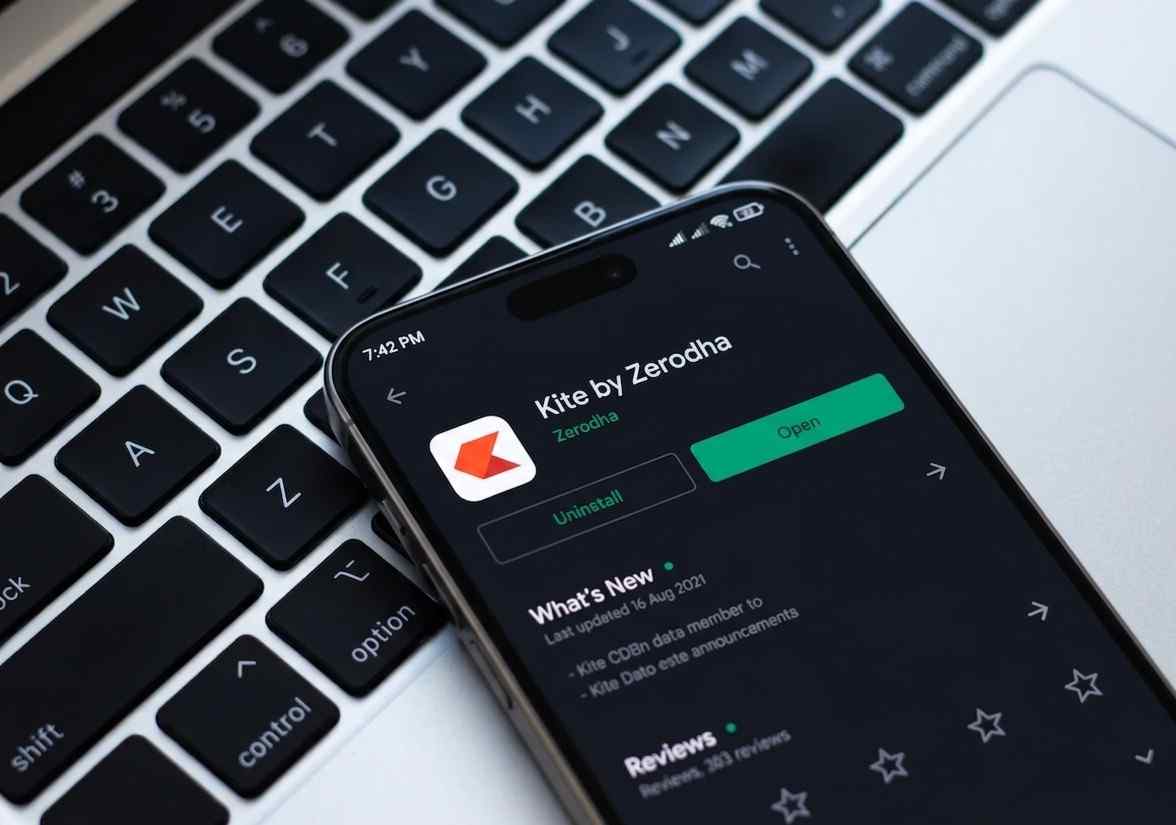
In 2015, Zerodha launched Kite, its web and mobile trading platform. Kite was developed in-house and represented a significant departure from the industry standard at the time. Most broker-provided platforms in 2015 were slow, Java-based desktop applications with cluttered interfaces, slow order execution, and poor mobile experience. Kite was built as a clean, lightweight, browser-first platform that loaded quickly, executed orders with minimal latency, and worked well on mobile devices.
The Kite platform became a competitive advantage in its own right. Traders began choosing Zerodha not only for the flat fee but for the quality of the trading experience. The charting tools were sophisticated enough for technical analysts. The API connectivity allowed algorithmic traders to build automated strategies. The mobile app was genuinely usable rather than a stripped-down afterthought. Kite raised the bar for what Indian retail traders expected from a trading platform and forced legacy brokers to invest in technology upgrades they had previously delayed for years.
Part IIIKey Milestones
-
2010August 15, 2010Zerodha Founded in Bengaluru
Zerodha Broking Limited is incorporated in Bengaluru on August 15, 2010, by Nithin Kamath and Nikhil Kamath. The company launches as a discount broker with a flat Rs 20 per order brokerage fee. The name Zerodha combines “Zero” and “Rodha” (the Sanskrit word for barrier), reflecting the founders’ goal of removing barriers to retail trading.
-
20122012Varsity Launched: Free Financial Education
Zerodha launches Varsity, a free online financial education platform covering equity markets, technical analysis, futures and options, personal finance, and more. Varsity is available in multiple Indian languages. It becomes one of the most comprehensive free financial education resources in India and serves as a top-of-funnel acquisition tool for Zerodha, bringing educated first-time investors into the platform.
-
20152015Kite Trading Platform Launched
Zerodha launches Kite, its proprietary web and mobile trading platform, developed entirely in-house. Kite is clean, fast, and browser-first. It includes advanced charting, watchlists, and order management. It sets a new standard for retail trading platforms in India and becomes Zerodha’s primary competitive differentiator beyond pricing.
-
20162016Kite Connect API Launched
Zerodha launches Kite Connect, its trading API that allows developers and algorithmic traders to build automated trading systems connected to Zerodha’s execution infrastructure. This makes Zerodha the first Indian broker to offer a robust public trading API. It attracts a community of developers, quant traders, and fintech startups who build tools and applications on top of Zerodha’s platform.
-
20172017Coin Launched: Zero-Commission Direct Mutual Funds
Zerodha launches Coin, a direct mutual fund investment platform that allows investors to buy direct plans of mutual funds with zero transaction charges. Direct plans have lower expense ratios than regular plans because they do not pay distributor commissions. Coin allows Zerodha’s clients to access these savings, while Zerodha charges a flat Rs 50 per month for investors with more than Rs 25,000 in mutual fund holdings on the platform.
-
20182018Rainmatter Capital Founded
Zerodha establishes Rainmatter Capital, a fintech-focused venture fund and accelerator. Rainmatter invests in early-stage fintech companies that are aligned with Zerodha’s philosophy of improving financial access and education in India. Portfolio companies include Smallcase, Sensibull, Streak, Goldenpi, Ditto Insurance, Finshots, and others.
-
20192019Zerodha Becomes India’s Largest Broker by Active Clients
Zerodha surpasses ICICI Securities, HDFC Securities, and other legacy brokers to become India’s largest retail broker by active client count on the National Stock Exchange. This milestone, achieved with zero external funding, validates the flat-fee model as a sustainable and scalable business architecture.
-
20212021Zerodha Valued at Over $1 Billion: An Accidental Unicorn
During the COVID-19 pandemic, Indian retail investor participation surged dramatically. Zerodha’s client base grew faster than at any point in its history, adding millions of new accounts. The trading volumes and the resulting brokerage, account fees, and interest income pushed Zerodha’s valuation past $1 billion in independent assessments and Nithin Kamath’s own statements, making it a unicorn that never raised outside funding to achieve that status.
-
2024FY24 (April 2023 to March 2024)Peak Year: Consolidated Revenue Rs 9,993 Crore, PAT Rs 5,496 Crore
FY24 is Zerodha’s peak financial year. Revenue from operations rises to Rs 9,993 crore (consolidated), up 46.3% from Rs 6,832 crore in FY23. Net profit rises 89% to Rs 5,496 crore. Zerodha crosses USD 1 billion in annual revenue. Return on net worth: 56%. Zerodha crosses USD 1 billion in annual revenue for the first time. The peak is driven by high F&O trading volumes, elevated market activity, and the accumulated benefit of a large active client base.
-
2025FY25 (April 2024 to March 2025)First Significant Decline: Revenue Falls 11.5%, PAT Falls 22.9%
SEBI implements new regulations on index derivatives trading effective October 1, 2024, including higher minimum contract sizes, removal of weekly expiry contracts on all indices except one per exchange, and revised fee structures. Zerodha CEO Nithin Kamath had warned publicly in September 2024 that these changes would cause a 30 to 50 percent decline in F&O revenue. FY25 revenue falls 11.5% to Rs 8,847 crore (from Rs 9,993 crore in FY24) and PAT falls to Rs 4,237 crore.
Part IVThe Business Model
How Zerodha Makes Money
Zerodha is widely described as a zero-commission broker, which is accurate for equity delivery trades but incomplete as a description of the full revenue model. The company has multiple revenue streams that together produce the Rs 8,847 crore in FY25 revenue.
The flat Rs 20 per executed order applies to intraday equity trades, futures trades, and options trades. Equity delivery trades are at zero brokerage. Currency and commodity derivatives are also at Rs 20 per order. This is the primary revenue line and the one most directly affected by trading volumes and regulatory changes.
The economics of flat brokerage only work well when the average order size is large. A Rs 20 fee on a Rs 500 options order is 4 percent, which is far above the market rate. A Rs 20 fee on a Rs 10 lakh futures order is 0.002 percent, which is far below the market rate. Zerodha’s business has historically attracted active traders with larger average position sizes, making the flat fee economically sensible for both parties. As the broader retail investor base has grown and smaller-sized trades have increased in proportion, the economics per trade have evolved.
In October 2024, Zerodha increased the flat brokerage cap from Rs 20 to Rs 20 per executed order remaining the same, but also introduced a minimum brokerage of Rs 0 for delivery and Rs 20 minimum for intraday and F&O. This structure remained consistent through FY25.
Zerodha charges an annual account maintenance charge (AMC) of Rs 300 plus 18 percent GST for its Demat account, billed quarterly at Rs 75 plus GST. This charge applies to all accounts, regardless of trading activity. With 8.1 million active NSE clients as of FY25, the AMC line alone represents a significant recurring revenue stream that is less volatile than brokerage income because it does not depend on trading volumes. Even in a year when equity markets are flat and trading activity falls, the AMC continues to flow from the existing client base.
The AMC model becomes more attractive as the client base grows because account maintenance costs do not scale proportionally with account count. The marginal cost of maintaining the millionth account is negligible compared to the cost of the first thousand. This creates a natural operating leverage in the AMC revenue line as the client base expands.
Zerodha’s Coin platform charges Rs 50 per month for investors who hold more than Rs 25,000 in direct mutual fund investments through the platform. This is the subscription revenue model applied to mutual fund investing. For investors who hold Rs 5 lakh or more in mutual funds through Coin, the Rs 50 monthly fee (Rs 600 per year) is a small fraction of the expense ratio savings they receive by investing in direct rather than regular mutual fund plans.
The direct plan advantage, which has been maintained since Coin’s 2017 launch, has kept this platform competitively positioned. Competitors like Groww offer zero-commission direct mutual fund investing, which creates pricing pressure. Zerodha’s response has been to position the Rs 50 monthly fee as a premium service charge rather than a commission, bundling it with the quality of the Coin platform, seamless integration with the Kite trading account, and access to Zerodha’s customer support infrastructure.
Zerodha holds client funds between the time they are deposited into the trading account and the time they are deployed in trades or withdrawn. This float earns interest at prevailing short-term rates. When interest rates are high, as they were during the RBI’s rate tightening cycle in 2022 to 2024, the float income is substantial. As rates moderate, this income line compresses.
Margin trade funding (MTF) is a separately disclosed revenue line. MTF allows clients to buy stocks using borrowed money, with Zerodha lending at a defined interest rate against the securities held as collateral. This is a banking-like activity regulated by SEBI. The interest income from MTF, alongside interest on client float, has become an increasingly important non-brokerage revenue stream for Zerodha as the company diversifies away from pure brokerage income.
Zerodha Capital, the company’s lending subsidiary, extends loans against securities (LAS). As of the first nine months of FY25, the Zerodha Capital loan book had reached Rs 381 crore, with zero NPAs since inception. The LAS business is distinct from MTF but is part of the same strategic direction of building recurring, interest-based income alongside the transaction-based brokerage revenue.
The Revenue Mix Shift
At Zerodha’s peak in FY24, the majority of revenue came from brokerage on F&O trades, which were the highest-volume and highest-frequency category. The SEBI regulatory changes of October 2024 reduced the addressable market for index options trading significantly, compressing this revenue line. Zerodha’s response has been to accelerate diversification into AMC, MTF interest, Coin subscriptions, and the Zerodha Capital lending business. Nithin Kamath’s September 2024 blog post described this strategic pivot explicitly, framing it as a planned transition rather than a crisis response.
The operating margin paradox in FY25: Zerodha’s revenue fell 11.5 percent in FY25 and net profit fell 22.9 percent. But the operating margin expanded from 55.25 percent in FY24 to 63.78 percent in FY25. This appears contradictory until you understand the cost structure. Brokerage revenue is high-margin because the marginal cost of handling one more trade is near zero. AMC and interest income are also high-margin. As overall revenue declined, expenses fell faster than revenue because Zerodha’s cost base is largely fixed: technology infrastructure, regulatory compliance, and a lean team of approximately 4,000 to 5,000 employees. The combination of lower revenue and lower absolute profit but higher margin is a signature of a highly operationally efficient business navigating a revenue headwind.
Part VThe Zerodha Ecosystem
Products Built In-House
Zerodha’s core competitive architecture rests on its proprietary technology products. Every major consumer-facing platform has been built by an in-house engineering team rather than licensed or white-labelled from a third party.
Kite
Trading Platform (Web and Mobile)
Launched 2015. Zerodha’s flagship trading platform. Available as a web app and Android and iOS mobile application. Features advanced charting, F&O chain visualisation, watchlists, and seamless order placement. Used by approximately 8 million active clients for daily equity, F&O, currency, and commodity trading.
Coin
Direct Mutual Fund Platform
Launched 2017. Allows investors to buy direct plans of SEBI-registered mutual funds with zero transaction commission. Charges Rs 50 per month for portfolios above Rs 25,000. Integrated with the Kite trading account for seamless movement of funds between equity trading and mutual fund investing.
Varsity
Financial Education Platform
Launched 2012. Free financial education covering stock markets, technical analysis, fundamental analysis, F&O strategies, personal finance, and more. Available in English, Hindi, Gujarati, Marathi, Tamil, Kannada, and other languages. One of the most widely used free financial education resources in India.
Console
Portfolio Analytics and Reporting
Portfolio analytics and performance reporting dashboard for Zerodha clients. Provides P&L statements, tax reports, dividend tracking, capital gains computation, and portfolio visualisation. Designed to simplify compliance with income tax filing requirements for active traders.
Streak
Algorithmic Trading (No Coding Required)
A no-code algorithmic trading platform that allows retail traders to create, backtest, and deploy automated trading strategies without programming knowledge. Built on Kite Connect’s API infrastructure. Streak is a Rainmatter portfolio company that operates as an independent entity while being deeply integrated with Zerodha’s platform.
Kite Connect API
Trading API for Developers
Launched 2016. A publicly available REST API that allows developers to build trading applications, algorithmic strategies, and portfolio management tools connected to Zerodha’s order management system. Widely used by quant traders, fintech startups, and developers. Charges a subscription fee for API access above the free tier limit.
Rainmatter Capital: The Fintech Portfolio
Rainmatter Capital was established in 2018 as Zerodha’s venture capital and accelerator arm. It invests in early-stage fintech and financial services companies that share Zerodha’s philosophy of democratising access to markets and financial products. Rainmatter does not chase unicorn valuations. It backs founders who are building sustainable, capital-efficient businesses in the financial services space.
| Portfolio Company | Category | Description |
|---|---|---|
| Smallcase Technologies | Investment Platform | A platform that allows investors to invest in curated baskets of stocks called smallcases, created by SEBI-registered research analysts. Integrated with multiple brokers including Zerodha. |
| Sensibull | Options Trading | An options strategy visualisation and trading platform that makes F&O trading more accessible to retail investors through visual payoff diagrams and strategy builders. Integrated with Kite. |
| Ditto Insurance | Insurance Advisory | A digital insurance advisory and purchase platform focused on term life and health insurance, offering unbiased policy recommendations without a commission-heavy sales model. |
| Finshots | Financial News | A daily financial news and analysis newsletter that explains complex economic and business events in plain language. Reaches hundreds of thousands of subscribers across India. |
| Goldenpi | Bond Investment | A platform for retail investors to purchase bonds, debentures, and fixed-income securities online. Part of Zerodha’s broader effort to expand the fixed income investing ecosystem in India. |
| Lessto | Carbon Markets | A carbon credit platform focused on environmental impact investing. Reflects Rainmatter’s broader mandate beyond pure financial services. |
Part VIThe Financials
Annual Financial Summary: FY20 to FY25
| Year | Revenue from Ops (Rs Cr) | Total Income (Rs Cr) | Net Profit (Rs Cr) | Operating Margin | Key Driver |
|---|---|---|---|---|---|
| FY20 | ~1,000 (est.) | N/A | ~424 (est.) | N/A | Pre-pandemic steady state; flat-fee model established; active clients growing |
| FY21 | ~2,729 (est.) | N/A | ~1,122 (est.) | N/A | COVID-19 surge in retail investor participation; demat accounts open at record pace nationally |
| FY22 | 4,964 | N/A | 2,094 | ~42% | Revenue up 82% YoY; PAT up 86% YoY; Zerodha already India’s largest broker by client count |
| FY23 | 6,832 | 6,877 | 2,908 | ~46% | Revenue up 37.6%; continued post-pandemic retail investor momentum; F&O volumes surge |
| FY24 | 9,993 | 9,994 | 5,496 | 55.25% | Revenue Rs 9,993 crore (consolidated); PAT up 89% to Rs 5,496 crore; crosses USD 1 billion revenue; RoNW 56% |
| FY25 | 8,847 | N/A | 4,237 | 63.78% | Revenue down 11.5% (from Rs 9,993 crore in FY24); PAT down 22.9%; SEBI F&O circular effective October 2024; operating margin improves despite revenue decline; cash reserves Rs 22,679 crore |
Revenue from Operations: FY22 to FY25 (Rs Crore)
Source: Zerodha Broking Limited financial filings. Zerodha is not publicly listed. Figures are from its annual financial statements filed with the Registrar of Companies.
The Balance Sheet Strength
Cash and Equivalents (FY25)
Rs 22,679 Cr
Held on balance sheet with no external debt. Entirely funded from accumulated profits since 2010.
Debt
Zero
Zerodha carries no financial debt. The company has never raised debt financing or issued bonds. It funds all operations and investments from internal cash flows.
Return on Net Worth (FY24)
56%
Return on net worth in FY24, Zerodha’s peak year. One of the highest RoNW figures among large Indian financial services companies in that year.
Operating Margin (FY25)
63.78%
Despite revenue declining 11.5% in FY25, operating margin improved from 55.25% to 63.78%, reflecting the high fixed-cost efficiency of the business model.
External Equity Raised
Zero
Zerodha has never raised venture capital, private equity, or any external equity funding. The company is wholly owned by its founders and is not publicly listed.
Active NSE Clients (FY25)
8.1 Million
Peak active clients on NSE during FY25; declined to 7.58 million by October 2025. Representing approximately 16% of India’s retail equity market. Largest or second-largest broker by active clients depending on the reference month in FY25.
Part VIIThe SEBI Circulars and Regulatory Risk
The October 2024 F&O Framework Changes
On July 31, 2024, SEBI released a consultation paper examining the risks and participation patterns in India’s equity derivatives market. The paper documented that a very large proportion of retail F&O traders were losing money: in FY24, approximately 93 percent of individual traders in the equity F&O segment incurred net losses. SEBI’s concern was that the rapid growth of retail F&O participation was creating systemic risk and financial harm to a large number of retail investors.
Following the consultation, SEBI issued a circular on October 1, 2024, implementing a package of measures designed to reduce speculative retail participation in index options. The key changes included raising the minimum contract value for index derivatives to Rs 15 lakh from the then-prevailing lower levels, reducing the number of weekly expiry contracts on each exchange to one index instead of multiple, introducing intraday position monitoring at three intervals in addition to end-of-day checks, and revising the upfront margin collection requirements for short options positions.
What Nithin Kamath said before it happened: In September 2024, before the SEBI circular was formally published but after the consultation paper had signalled the direction, Nithin Kamath published a blog post on Zerodha’s website warning that the new regulations would cause a 30 to 50 percent decline in Zerodha’s revenue from the index options and weekly expiry trading that had driven a significant portion of its F&O brokerage income. This level of transparency about the expected financial impact of regulatory change was unusual for a private company with no public disclosure obligations and is consistent with the candour that has characterised Kamath’s public communication since Zerodha’s founding.
Why Zerodha Was More Exposed Than Competitors
Zerodha’s exposure to the F&O regulatory changes was higher than average for two reasons. First, its flat Rs 20 brokerage fee made it the preferred platform for high-frequency F&O traders who executed large numbers of small trades. These traders, who particularly exploited weekly expiry contracts in index options, were disproportionately concentrated on Zerodha’s platform relative to the market average. Second, Zerodha’s zero-commission model for equity delivery meant that equity delivery trading, which was unaffected by the F&O circular, generated no brokerage revenue. The company had less diversification into low-volatility revenue streams than full-service brokers.
Full-service brokers like ICICI Securities and HDFC Securities are more insulated because they earn revenue from advisory services, portfolio management, insurance distribution, and equity delivery commissions. These lines were entirely unaffected by the F&O changes. Zerodha’s revenue concentration in transaction-based F&O income was both the source of its FY24 peak and the reason for the larger-than-average FY25 decline.
The Response: Diversification and Cost Discipline
Zerodha’s response to the regulatory headwind has been a deliberate acceleration of revenue diversification. Margin trade funding, where Zerodha lends money to clients to buy stocks at a defined interest rate, has been expanded. Zerodha Capital, the loans-against-securities subsidiary, is being scaled after reaching a loan book of Rs 381 crore in nine months of FY25. The Coin mutual fund platform’s subscription revenue provides recurring income independent of market volatility. The AMC on the Demat account continues to grow as the overall client base, though growing more slowly than during the COVID boom, remains above 8 million active clients.
On the cost side, Zerodha has historically operated with exceptional efficiency. The company employs approximately 3,500 people across all group entities (including subsidiaries) to serve 8 million active clients, a ratio that is possible only because the platform is almost entirely digital and self-service. The expansion in operating margin from 55 percent in FY24 to 63 percent in FY25, despite the revenue decline, reflects Zerodha’s ability to manage its cost base tightly even under revenue pressure.
The competitive landscape has shifted: In FY25 and into FY26, Groww surpassed Zerodha in total demat account count. Zerodha had long led in active client count on NSE but faces increasing competition from Groww, Angel One, and Upstox in the discount broker category, and from fintech-native players entering the market. Zerodha’s response has been to deepen the quality of its existing platform rather than compete on customer acquisition cost. The Kite platform, Coin, Varsity, and the Rainmatter ecosystem provide a depth of offering that simpler discount brokers do not yet match. Whether that depth sustains Zerodha’s market position as the regulatory environment reduces the revenue advantage of F&O leadership is the central strategic question for the next three years.
Zero Barriers, Zero VC, and a Business That Generated Rs 5,496 Crore in Profit
Zerodha is one of the most instructive business case studies in Indian financial history, and not only because of its financial performance. The instructive element is the model itself. Nithin Kamath built a company that was profitable from an early stage, never raised external funding, kept cost discipline through its highest-revenue years, and built an ecosystem of products that serve the customer’s interest rather than the company’s cross-sell revenue. The Varsity education platform, the direct mutual fund plan on Coin, the transparent blog posts warning customers about regulatory risks: these are not typical behaviours for a financial services company managing Rs 22,679 crore in cash.
The FY24 peak of Rs 9,993 crore in consolidated revenue and Rs 5,496 crore in net profit was exceptional. It reflected a combination of high retail participation in equity markets, elevated F&O volumes driven by weekly expiry contracts, and the accumulated benefit of over a decade of client acquisition through the flat-fee model. The SEBI circular of October 2024 reduced this peak, and FY25’s Rs 4,237 crore profit is a lower but still extraordinary level of profitability for a company of Zerodha’s size and structure.
The strategic challenge for FY26 and beyond is not survival. A company with Rs 22,679 crore in cash and zero debt is not at risk. The challenge is whether Zerodha can rebuild a revenue trajectory that is less dependent on the F&O brokerage line that regulators have constrained. The AMC, MTF, and lending businesses are growing but remain smaller than the brokerage line they are meant to supplement. Zerodha’s history suggests that the founders are capable of building durable businesses with patient, rational capital allocation. The question is whether the next chapter can be built as efficiently as the last fifteen years.
Frequently Asked Questions
Zerodha Broking Limited was incorporated on August 15, 2010, in Bengaluru, Karnataka. It was co-founded by brothers Nithin Kamath and Nikhil Kamath. Nithin Kamath, born in 1979, had spent the prior decade as an equity trader and sub-broker for Reliance Money in Bengaluru. Nikhil Kamath, born in 1986, is also a self-taught trader and investor. The company was named using a combination of the English word “zero” and “rodha,” a Sanskrit word meaning barrier, reflecting the founders’ goal of removing barriers to retail participation in financial markets. The company launched with a flat Rs 20 per executed order brokerage fee, replacing the percentage-based model that dominated Indian retail broking at the time. The founding capital came entirely from the personal trading profits of the Kamath brothers; no venture capital or external equity was raised at founding or at any subsequent point. As per MCA filings, Nithin Kamath holds 44.37%, Nikhil Kamath holds 39.35%, and Seema Patil (their mother) holds 15.87% of Zerodha Broking Limited.
FY24 (April 2023 to March 2024) was Zerodha’s peak financial year. Consolidated revenue from operations was Rs 9,993 crore, up 46.3 percent from Rs 6,832 crore in FY23. Total income including other income was Rs 9,994 crore (essentially the same figure, reflecting minimal other income). Net profit was Rs 5,496 crore, up 89 percent from Rs 2,908 crore in FY23. Return on net worth in FY24 was 56 percent. Operating margin was 55.25 percent. This made FY24 the year in which Zerodha crossed USD 1 billion in annual revenue for the first time. FY25 (April 2024 to March 2025) saw the first significant decline in Zerodha’s financial history. Revenue from operations fell 11.5 percent to Rs 8,847 crore. Net profit fell 22.9 percent to Rs 4,237 crore. Despite these declines, operating margin improved to 63.78 percent from 55.25 percent in FY24, reflecting the high fixed-cost leverage of the business. Zerodha remained debt-free with cash and equivalents of Rs 22,679 crore on the balance sheet. The decline in FY25 was attributed primarily to SEBI’s October 2024 circular on index derivatives trading, which reduced weekly expiry contracts and raised minimum contract sizes, compressing the F&O brokerage income that had been a major driver of FY24’s record results.
No. Zerodha has never raised venture capital, private equity, or any form of external equity funding since its founding in 2010. It is wholly owned by its co-founders Nithin Kamath and Nikhil Kamath. The company was funded at inception from the personal trading profits accumulated by the founders over the prior decade and has since been funded entirely from its own operating cash flows. Nithin Kamath has explained this decision on multiple occasions: raising VC money would have required optimising for user growth metrics and subsidising user acquisition, which is inconsistent with Zerodha’s model of charging low but genuine fees and growing organically through the quality of the product. Zerodha is also not publicly listed on any stock exchange. It files financial results with the Registrar of Companies as a private company. Its financial statements are therefore in the public domain through RoC filings but not through the standard listed company disclosure mechanism.
Kite is Zerodha’s proprietary trading platform, launched in 2015 and developed entirely in-house. It is available as a web application and as mobile apps for Android and iOS. Kite was designed to be clean, lightweight, fast-loading, and browser-native at a time when most Indian broker platforms were slow, Java-based desktop applications with poor mobile compatibility. Kite features advanced charting tools, options chain visualisation, watchlists supporting multiple securities, order placement with various order types, and portfolio management. It set a new standard for what Indian retail traders expected from a trading platform. Kite’s quality of execution and interface design became a competitive advantage for Zerodha alongside the flat-fee pricing, as traders chose Zerodha not only because it was cheaper but because the trading experience was better. In 2016, Zerodha extended Kite’s infrastructure through Kite Connect, a publicly available REST API that allows developers, algorithmic traders, and fintech companies to build automated trading systems and investment applications connected to Zerodha’s order management system. Kite Connect created an entire ecosystem of third-party applications that run on Zerodha’s infrastructure, deepening the platform’s stickiness and generating a developer community around the Zerodha ecosystem.
Rainmatter Capital is Zerodha’s venture capital and accelerator arm, established in 2018. It invests in early-stage companies in the fintech and financial services space, with a preference for companies that share Zerodha’s philosophy of democratising access to financial markets and improving financial literacy. Rainmatter does not pursue unicorn-scale outcomes; it backs capital-efficient businesses with sustainable models. Notable Rainmatter portfolio companies include Smallcase Technologies, a platform allowing investors to invest in curated stock baskets; Sensibull, an options strategy visualisation and trading platform integrated with Kite; Streak, a no-code algorithmic trading platform; Ditto Insurance, a digital insurance advisory and purchase platform focused on term and health insurance; Finshots, a widely read daily financial news and analysis newsletter; and Goldenpi, a retail bond and fixed-income investment platform. Rainmatter’s investment mandate has also expanded beyond pure fintech to include climate-focused companies such as Lessto, a carbon credit platform, reflecting a broader sustainability orientation in the fund’s later portfolio.
In July 2024, SEBI published a consultation paper documenting that approximately 93 percent of individual retail traders in India’s equity F&O segment incurred net losses in FY24, prompting regulatory concern about retail financial harm. Following the consultation, SEBI issued a circular effective October 1, 2024, implementing several measures to reduce speculative retail participation in index derivatives. The key measures were: raising the minimum contract value for index derivatives to Rs 15 lakh; reducing weekly expiry index options contracts on each exchange to one index from the previous multiple; introducing intraday position monitoring at three intervals during the trading day; and revising upfront margin requirements for short options positions. Zerodha CEO Nithin Kamath published a blog post in September 2024 warning that these changes would cause a 30 to 50 percent reduction in Zerodha’s F&O revenue, given the company’s high exposure to weekly index options trading. The financial impact in FY25 was significant: revenue fell 11.5 percent from the FY24 peak and net profit fell 22.9 percent. Zerodha responded by accelerating diversification into margin trade funding, loans against securities through Zerodha Capital, and recurring income from account maintenance charges and Coin subscriptions. Operating margin improved to 63.78 percent in FY25 from 55.25 percent in FY24 despite the revenue decline, reflecting the cost efficiency of the business model.
Disclaimer: This article is for informational and educational purposes only and is current as of June 2026. Zerodha Broking Limited is a private unlisted company. All financial figures are sourced from Zerodha’s annual financial statements filed with the Registrar of Companies and from official blog posts and public statements by Zerodha co-founder Nithin Kamath published on Zerodha’s official website (zerodha.com). FY25 financial figures (revenue Rs 8,847 crore, PAT Rs 4,237 crore, operating margin 63.78%, cash Rs 22,679 crore) are from filed statements. FY24 figures (consolidated revenue from operations Rs 9,993 crore; total income Rs 9,994 crore; PAT Rs 5,496 crore; RoNW 56%; operating margin 55.25%) are from consolidated financial statements filed with RoC. FY22 figures (revenue Rs 4,964 crore, PAT Rs 2,094 crore) are from filed statements. This article does not constitute investment advice. fiscalzenith.com accepts no liability for decisions made in reliance on information in this article.