Follow us on:


Insolvency Case Study | June 2026
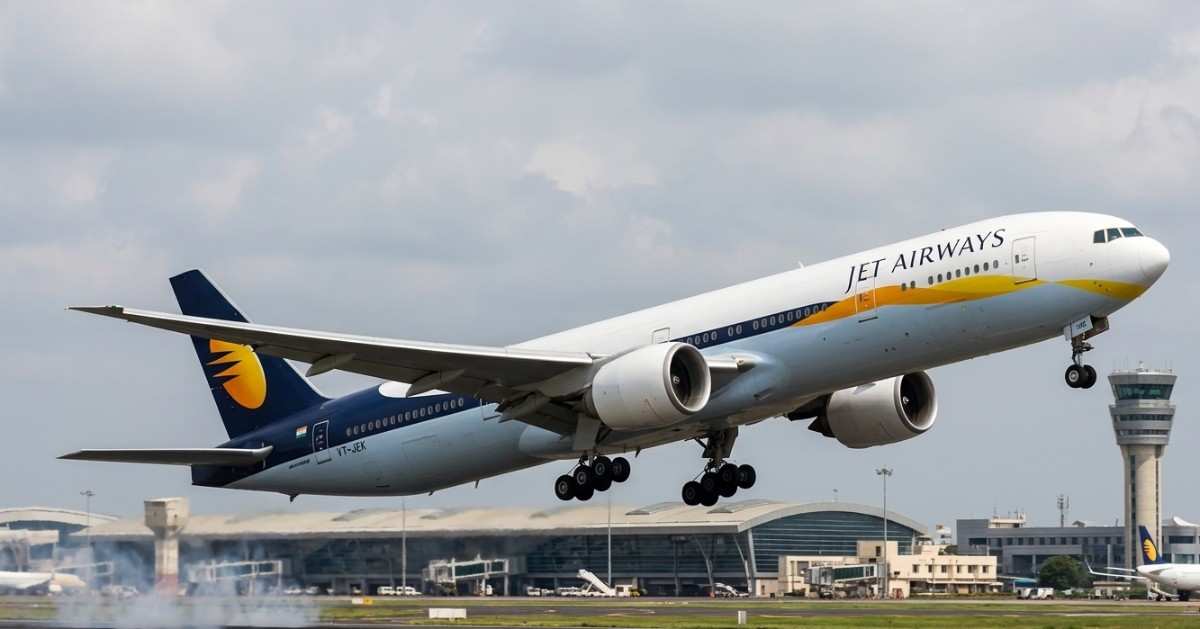
On April 17, 2019, Jet Airways operated its final commercial service, flight 9W-2502 from Amritsar to Mumbai, which landed shortly after midnight. The airline had been grounded by a liquidity crisis, not a crash. Three months later, India’s largest aviation insolvency was admitted to the National Company Law Tribunal. A resolution applicant was selected. A plan was approved by the court. And then, for five years, nothing flew. On November 7, 2024, the Supreme Court of India ordered the liquidation of Jet Airways under Article 142 of the Constitution, calling the non-implementation of the resolution plan over five years a “peculiar and alarming” circumstance. This is the story of why an approved insolvency resolution plan still failed to get an airline off the ground.
April 17, 2019
Date Jet Airways suspended all commercial operations after lenders declined emergency funding. The airline had been flying for 26 years.
June 22, 2021
Date the NCLT Mumbai Bench approved the Jalan-Kalrock Consortium resolution plan, two years after insolvency admission. The plan was supposed to be implemented within 90 days.
Rs 350 Cr
First tranche of upfront payment JKC was required to pay as a condition precedent for ownership transfer. This single payment became the central flashpoint of the entire dispute.
Nov 7, 2024
Date the Supreme Court ordered Jet Airways’ liquidation, exercising extraordinary powers under Article 142. Five years and five months after grounding, the airline’s fate was sealed.
Table of Contents
- The Rise and Fall of Jet Airways (1993 to 2019)
- The CIRP: Insolvency Admission and the Bidding Process
- The Jalan-Kalrock Consortium: Who Were the Bidders?
- The Resolution Plan: What Was Approved on June 22, 2021
- The DGCA Slot Dispute: The First Structural Barrier
- The AOC Cycle: Obtained, Expired, Renewed, Expired Again
- The Rs 350 Crore Payment Battle
- The Tribunal Wars: NCLT, NCLAT and the Supreme Court
- The Supreme Court Liquidation Order: November 7, 2024
- What the Jet Airways Case Reveals About the IBC Framework
- Frequently Asked Questions
Part IThe Rise and Fall of Jet Airways (1993 to 2019)
Jet Airways (India) Limited was incorporated on April 1, 1992, and commenced operations as an air taxi operator on May 5, 1993, with a fleet of four leased Boeing 737-300 aircraft. It was founded by Naresh Goyal, a former travel agent who had operated as a general sales agent for international airlines in India since 1974 through his company Jet Air (Private) Limited. The airline began full scheduled operations in 1995 and launched its first international service in 2004 with a flight from Chennai to Colombo. It listed on the Bombay Stock Exchange on December 28, 2004.
At its peak, Jet Airways was India’s largest private airline by market share. It held a 21.2% passenger market share in February 2016. The airline operated over 300 flights daily to 74 destinations, flew to destinations across Europe, North America, Southeast Asia, and the Middle East, and had built a reputation for full-service quality that domestic competitors largely could not match. In 2007, it acquired Air Sahara for approximately Rs 1,450 crore and relaunched it as JetLite. Its workforce at the peak was approximately 16,000 to 23,000 employees across its operations.
The Structural Weaknesses Behind the Collapse
The collapse of Jet Airways was not sudden. It was the product of a decade of compounding structural weaknesses operating behind a credible consumer brand. The airline had accumulated significant debt through its expansion, fleet acquisition, and the Air Sahara acquisition. It operated in a market where low-cost carriers, particularly IndiGo (launched 2006) and SpiceJet, competed aggressively on price on domestic routes that formed the backbone of Jet’s network. Aviation fuel price volatility, a depreciating rupee that raised dollar-denominated leasing costs, and thin margins across the industry made the debt burden progressively harder to service.
By early 2019, Jet Airways owed approximately Rs 8,500 crore to a consortium of 26 banks led by the State Bank of India. It owed approximately Rs 3,000 crore to vendors, airport operators, and fuel companies. It owed unpaid salaries to its workforce. It had reduced its operational fleet from 119 aircraft to 35 as aircraft lessors repossessed planes for unpaid lease rentals. Daily operations had fallen from approximately 450 flights to around 150 flights.
The lender takeover and Goyal’s exit: On March 25, 2019, the Jet Airways board approved a resolution plan formulated by the SBI-led lender consortium. As part of the plan, Naresh Goyal and his wife Anita Goyal, along with Etihad Airways’ nominee director Kevin Knight, resigned from the Jet Airways board. The lenders converted Rs 1 of outstanding debt into equity by issuing 114 million equity shares, giving the bank consortium a 50% stake while Goyal’s stake fell to 25.5% and Etihad’s to 12%. Lenders committed emergency funding of up to Rs 1,500 crore, conditional on Goyal’s exit. The emergency funding was never released in full, and no strategic buyer emerged through the invitation of bids that followed.
On April 17, 2019, after lenders declined to provide the immediate funding needed to continue operations and after no strategic investor had committed to a rescue, Jet Airways suspended all operations. The final flight was flight 9W-2502 from Amritsar to Mumbai. The airline that had flown for 26 years, and that had been the airline of choice for millions of Indian travellers, had come to a full stop. A consortium of lenders, led by the State Bank of India, filed an insolvency petition with the National Company Law Tribunal on June 17, 2019. On June 20, 2019, the NCLT’s Mumbai Bench admitted the petition, initiating the Corporate Insolvency Resolution Process (CIRP) for Jet Airways (India) Limited. Ashish Chhawchharia was appointed as Interim Resolution Professional and subsequently confirmed as Resolution Professional.
Part IIThe CIRP: Insolvency Admission and the Bidding Process
The Corporate Insolvency Resolution Process for Jet Airways was one of the most complex CIRP proceedings in Indian insolvency history. The combination of cross-border assets, a large creditor pool, significant employee claims, the aviation-specific regulatory environment, and the unusual challenge of reviving an airline from zero operations rather than simply selling a going concern made it structurally distinct from most corporate insolvencies under the Insolvency and Bankruptcy Code, 2016 (IBC).
Claims Received and Admitted
The Resolution Professional received claims totalling Rs 24,887 crore across 16,643 claims. Of these, financial creditor claims of Rs 8,462 crore were received, of which Rs 7,807 crore was admitted. SBI’s admitted claim was the largest among financial creditors. Operational creditor claims (excluding employees and workmen) amounted to Rs 12,372 crore, all placed under verification. Workmen and employee claims totalled Rs 443 crore (also under verification), with 11,965 individual claims from authorised representatives. The admitted financial creditor claims figure of approximately Rs 7,807 crore was later referenced by the CoC as the baseline against which any resolution plan would be evaluated.
Total Claims Received
Rs 24,887 Cr
Across 16,643 claims filed with the Resolution Professional
Financial Creditor Claims
Rs 8,462 Cr
Received; Rs 7,807 crore admitted by the RP
Operational Creditor Claims
Rs 12,372 Cr
All placed under verification; vendors, airports, fuel companies
Employee Claims
Rs 443 Cr
11,965 individual claims from employees and workmen
CIRP Admission Date
June 20, 2019
NCLT Mumbai Bench; petition filed by SBI-led lender consortium
Resolution Professional
Ashish Chhawchharia
Appointed IRP on June 20, 2019; confirmed RP at CoC first meeting July 16, 2019
The Cross-Border Insolvency Dimension
Jet Airways had assets and liabilities in multiple jurisdictions. Aircraft were leased from lessors in Ireland, the United States, and other countries. The airline had a legal entity in the Netherlands that had been placed into liquidation proceedings there. This created a cross-border insolvency situation with no established statutory framework under Indian law at the time, since Part Z of the IBC dealing with cross-border insolvency had not yet been notified. The Resolution Professional and the Dutch administrator entered into a protocol for cooperation, which the NCLT approved, marking one of the first cross-border insolvency cooperation arrangements in India’s IBC history.
The Bidding Process and Selection of JKC
The Resolution Professional issued the first Expression of Interest (EoI) advertisement on July 20, 2019. Given the complexity of the case, the COVID-19 pandemic, extensions granted by the NCLT and NCLAT, and the challenges of attracting viable bidders for a grounded airline with no operational fleet, the bidding process was prolonged. The Jalan-Kalrock Consortium, led by UAE-based businessman Murari Lal Jalan and London-based Kalrock Capital (represented by Florian Fritsch), emerged as the successful resolution applicant. The Committee of Creditors (CoC), comprising the consortium of 26 lenders led by SBI, approved the JKC resolution plan through e-voting that concluded on October 17, 2020. JKC proposed to relaunch Jet Airways as a full-service carrier with an initial investment of approximately Rs 1,000 crore.
Part IIIThe Jalan-Kalrock Consortium: Who Were the Bidders?
Understanding the composition of the Jalan-Kalrock Consortium (JKC) is essential to understanding why the resolution plan encountered the execution problems it did. The consortium was an unusual pairing of a UAE-based entrepreneur with no prior airline ownership experience and a London-based private equity and investment management firm.
JKC Consortium Composition
Lead memberMurari Lal Jalan (UAE-based entrepreneur)
PartnerKalrock Capital (London-based investment manager; representative Florian Fritsch)
CoC approval dateOctober 17, 2020 (e-voting conclusion)
NCLT plan approval dateJune 22, 2021
Proposed relaunch modelFull-service carrier; initial investment approximately Rs 1,000 crore
Performance Bank Guarantee (PBG)Rs 150 crore (submitted per IBBI Regulation 36B(4A))
Murari Lal Jalan’s role post-approvalNon-executive chairman of Jet Airways
JKC’s claimed total spending on revivalRs 700 crore (stated by JKC before the Supreme Court)
Murari Lal Jalan is a UAE-based entrepreneur with business interests spanning real estate and other sectors. He had no prior experience in owning or operating a commercial airline. Kalrock Capital is a London-based investment management firm. The consortium positioned themselves as turnaround investors who would bring fresh capital and management focus to rebuild Jet Airways from the ground up. They proposed to relaunch the airline initially as a domestic full-service carrier and progressively expand internationally.
The absence of prior airline operating experience in the consortium’s leadership was noted by aviation analysts at the time of the CoC approval. Running an airline at scale in India requires navigating regulatory requirements, managing aircraft leasing relationships, obtaining and maintaining operating certificates, building slot portfolios, staffing and training thousands of employees, and sustaining operations through the inherently thin-margin, cash-flow-intensive dynamics of commercial aviation. These are not challenges that generalist investors typically encounter, and the JKC case would test whether the IBC framework had adequately screened for operational capability alongside financial capacity.
Part IVThe Resolution Plan: What Was Approved on June 22, 2021
The NCLT Mumbai Bench, chaired by Mohammed Ajmal and V. Nallasenapathy, approved the JKC resolution plan on June 22, 2021, approximately two years after insolvency admission. The approval order set a 90-day implementation deadline starting from the date of approval, within which conditions precedent had to be fulfilled. A further extension of 180 days was permissible. This meant the implementation was expected to be substantially complete by approximately September 2021, with a hard outer limit of approximately March 2022.
Key Conditions Precedent in the Plan
The financial conditions precedent required JKC to infuse the first tranche of equity into Jet Airways within the stipulated timeframe. The upfront payment requirement of Rs 350 crore was the primary financial CP for ownership transfer. Separately, JKC had submitted a Performance Bank Guarantee (PBG) of Rs 150 crore as required under IBBI Regulation 36B(4A). The resolution plan specified that the PBG was a separate security instrument and could not be adjusted against or counted toward the Rs 350 crore upfront payment obligation. This distinction would become the central legal dispute between JKC and the lenders before the NCLAT and Supreme Court.
Additional financial milestones under the plan included further equity infusions over time to fund fleet acquisition, working capital, maintenance, and operational ramp-up. The total stated investment of Rs 1,000 crore was to be deployed over multiple tranches across the first several years of operations.
Regulatory conditions precedent included obtaining or maintaining a valid Air Operator Certificate (AOC) from the Directorate General of Civil Aviation (DGCA), the core flying permission without which commercial services cannot operate. The plan also required regulatory clearances from the Ministry of Civil Aviation for the change of ownership and management. The slot allocation question, which was not resolved in the NCLT’s approval order, required separate engagement with the DGCA and the civil aviation ministry. The NCLT’s June 22, 2021 order explicitly declined to give directions on slot historicity, stating that the issue would be handled by the government or the appropriate authority, leaving JKC to pursue slots through the normal regulatory process.
Operational conditions precedent included the transfer of ownership and management of Jet Airways to JKC upon financial CP fulfillment, appointment of a new board and senior management, re-engagement of aircraft lessors to secure a minimum operational fleet, establishment of maintenance and engineering contracts, reactivation of the airline’s systems and technology infrastructure, and rehiring or retraining of operational staff including pilots, cabin crew, engineers, and ground handling personnel. The DGCA requires a minimum fleet deployment of 20 aircraft as a prerequisite for air traffic clearances. This operational CP was inherently circular: it could only be met if the airline was in a position to operate, but reaching that position required completing the financial and regulatory CPs first.
None of the conditions precedent were fully implemented within the 90-day or the extended 270-day window following the June 22, 2021 NCLT approval. The 90-day period expired in September 2021 with no relaunch. JKC and lenders entered a cycle of extensions, applications, counter-applications, and escalating disputes before the NCLT, NCLAT, and eventually the Supreme Court. The ownership of Jet Airways was never formally transferred to JKC. The airline never flew a single commercial flight after April 17, 2019. By the time the Supreme Court ordered liquidation on November 7, 2024, three years and four and a half months had passed since the resolution plan was approved, and five years and six months had passed since the airline was grounded, with zero commercial flights operated.
Part VThe DGCA Slot Dispute: The First Structural Barrier
Airport slots are time-specific permissions for an aircraft to land or take off at a congested airport. At major Indian airports including Mumbai and Delhi, slots are a scarce regulatory resource. Jet Airways, at the time of its April 2019 grounding, held a substantial portfolio of slots at these airports built up over 26 years of operations. These slots were the foundation of its network and a large part of its operational and commercial value.
When Jet Airways grounded operations, the DGCA temporarily reallocated these slots to other airlines to maintain service continuity at airports. Carriers including IndiGo, Air India, SpiceJet, and Vistara absorbed Jet’s former slots on their respective route networks. The question of what would happen to these slots when and if Jet relaunched was left unresolved.
The Historicity Principle and Why It Could Not Apply
International aviation slot allocation follows the “grandfather rights” or historicity principle: airlines that hold slots in one scheduling season generally retain them in the equivalent season of the following year, provided they use them for at least 80% of their allocated times (the “use it or lose it” rule). Jet Airways, having grounded for an indefinite period, could not satisfy any usage requirement and therefore could not invoke historicity to reclaim its former slots.
The JKC consortium had initially expected that slot restoration would be part of the NCLT-approved resolution plan. The NCLT’s June 22, 2021 order, however, explicitly declined to give any direction on slot historicity, noting only that DGCA had stated it could not reallocate slots from airlines currently using them without a valid regulatory basis, and that the new management of Jet Airways would have to apply for slots through the standard process like any new or resuming operator.
Why slots were irreplaceable for the revival plan: The JKC plan to relaunch Jet Airways as a full-service carrier with 20 or more aircraft was commercially viable only if the airline could secure the route network its brand had been built on, particularly Mumbai-Delhi, Mumbai-Bengaluru, and key international routes. Without priority slots at Mumbai Chhatrapati Shivaji Maharaj International Airport and Indira Gandhi International Airport Delhi, a relaunching Jet Airways would be competing for residual slots against established operators who had embedded themselves into the routes Jet had vacated. The commercial projections in the resolution plan were implicitly premised on a slot portfolio that the DGCA and the regulatory framework could not guarantee.
The DGCA’s position was legally defensible and commercially reasonable from the perspective of the incumbent airlines using the slots. DGCA cannot arbitrarily cancel validly held slots from operational airlines without regulatory justification. The absence of a clear statutory provision in the IBC for handling sector-specific regulatory assets in airline insolvencies meant that one of the most valuable assets in the resolution plan simply fell outside the IBC framework entirely. This was a structural gap in the law, not a regulatory failure, but its practical effect on the JKC revival plan was severe.
Part VIThe AOC Cycle: Obtained, Expired, Renewed, Expired Again
An Air Operator Certificate (AOC) is the fundamental operating licence for a commercial airline in India, issued by the DGCA under Rule 133A of the Aircraft Rules, 1937. Without a valid AOC, no commercial flight can be operated. The AOC is typically valid for one year and requires continuous compliance with airworthiness, safety, and operational standards to maintain validity. An AOC cannot be granted to an airline that has no operational fleet, which creates a circular dependency for a grounded airline attempting to revive.
The AOC history for Jet Airways during the insolvency period illustrates the operational fragility of the revival attempt:
Jet Airways operated its final commercial flight, 9W-2502 from Amritsar to Mumbai, which landed shortly after midnight on April 17, 2019. All operations were suspended due to inability to fund continued flying after lenders declined emergency disbursement. The airline’s then-existing AOC became practically inoperable as no aircraft were available for commercial service.
The National Company Law Tribunal’s Mumbai Bench admitted the insolvency petition filed by the SBI-led lender consortium, initiating the Corporate Insolvency Resolution Process. Ashish Chhawchharia was appointed as Interim Resolution Professional. The CIRP clock began running.
The Committee of Creditors concluded e-voting on October 17, 2020, and the resolution plan submitted by Murari Lal Jalan and Florian Fritsch (Jalan-Kalrock Consortium) was approved under Section 30(4) of the IBC as the successful resolution plan. The plan proposed relaunching Jet Airways as a full-service carrier with initial investment of approximately Rs 1,000 crore.
The NCLT Mumbai Bench approved the JKC resolution plan. The implementation was required within 90 days (i.e., by approximately September 20, 2021), with a permissible extension of a further 180 days. The NCLT declined to give directions on slot historicity and left this to be resolved with the government or appropriate regulatory authority. The resolution professional stated the airline could be back in the skies by end-2021 if everything proceeded smoothly.
The DGCA re-issued the Air Operator Certificate to Jet Airways on May 20, 2022. JKC announced this as a major milestone, stating that the airline aimed to recommence operations between July and September 2022. The AOC was valid for one year and required the airline to begin commercial operations to demonstrate continued compliance. At the time of AOC issuance, JKC had fulfilled certain conditions precedent and proving flights had been conducted between May 15 and May 17, 2022 with DGCA officials on board.
The AOC, valid for one year from May 20, 2022, expired on May 19, 2023. The airline had not operated a single commercial flight during the 12-month validity period. The lapse of the AOC reflected the paralysis caused by the ongoing dispute between JKC and the lenders over the Rs 350 crore payment and the unresolved ownership transfer. Without a valid AOC, commercial operations were legally impossible.
JKC announced on July 31, 2023, that the DGCA had renewed the AOC on July 28, 2023. However, the DGCA clarified that the extension was conditional and limited: it extended the AOC “only for the limited purpose of completing the ongoing CIRP” and only until September 3, 2023, coinciding with the extension of CIRP timelines granted by the NCLT and NCLAT to that date. The extension was not a commercial AOC renewal for flight operations; it was a CIRP-process-specific conditional extension. This distinction was significant: the airline was still not cleared to fly commercially.
The Supreme Court of India, exercising its extraordinary powers under Article 142 of the Constitution, ordered the liquidation of Jet Airways. The bench led by CJI DY Chandrachud noted that the AOC had expired in September 2023 and had not been extended further, and that the resolution plan had not been implemented for five years. The NCLT Mumbai was directed to appoint a liquidator forthwith. The Rs 200 crore paid by JKC in cash was ordered forfeited. Lenders were permitted to encash the Rs 150 crore performance bank guarantee.
Part VIIThe Rs 350 Crore Payment Battle
If the slot dispute was the structural barrier to the airline’s commercial future, the Rs 350 crore payment dispute was the legal and financial battlefield on which the insolvency case was ultimately decided. The payment was defined in the approved resolution plan as the first tranche of equity to be infused by JKC as a condition precedent for the formal transfer of ownership of Jet Airways from the lenders to JKC.
The lenders, led by SBI, took the position that JKC had to pay Rs 350 crore in cash by a stipulated deadline to trigger the ownership transfer. JKC, facing difficulty in assembling the full Rs 350 crore in cash, sought to adjust the Rs 150 crore Performance Bank Guarantee (PBG) it had submitted against this obligation. The lenders disputed this adjustment, arguing that the PBG was a separate security instrument whose purpose was to provide lenders with recourse in the event of plan non-implementation, and that it could not simultaneously serve as part of the equity infusion payment. The NCLAT allowed the PBG adjustment. The Supreme Court reversed this decision.
Rs 350 Crore Payment Timeline: What JKC Paid and When
August 31, 2023: Original NCLAT deadline
Rs 0 of Rs 350 Cr
Zero payment made. JKC missed the original deadline entirely.
September 1, 2023: First cash instalment paid
Rs 100 Cr of Rs 350 Cr (29%)
First instalment paid one day after the original deadline was missed.
September 30, 2023: Second instalment paid (extended NCLAT deadline)
Rs 200 Cr of Rs 350 Cr (57%)
Second Rs 100 Cr paid. Lenders raised concerns that Rs 13 Cr came from sources other than JKC directly.
JKC claimed completion: Rs 200 Cr cash plus Rs 150 Cr PBG adjustment
Disputed by Supreme Court
NCLAT allowed PBG adjustment. Supreme Court reversed this, holding the adjustment was impermissible. Rs 200 Cr cash was forfeited. Lenders were permitted to encash the Rs 150 Cr PBG.
The Supreme Court’s finding on the PBG adjustment: The Supreme Court held that the NCLAT had committed an error in allowing JKC to adjust the Rs 150 crore PBG against the Rs 350 crore payment obligation. The court found that the NCLAT’s order allowing the adjustment was contrary to its own January 18, 2024, directions and did not align with the provisions of the resolution plan. A PBG is a separate security mechanism to protect creditors in the event of plan failure; it cannot be simultaneously treated as a contribution toward plan compliance. The Rs 200 crore paid in cash was ordered forfeited, and lenders were permitted to encash the Rs 150 crore PBG.
The Source of Funds Controversy
An additional dimension of the payment dispute was the question of the source of JKC’s funds. When JKC made its second payment of Rs 100 crore by September 30, 2023, lenders appearing through Additional Solicitor General N. Venkatraman at the NCLAT flagged that Rs 13 crore of the Rs 200 crore paid in cash had come from “other sources” rather than directly from JKC. This raised concerns about whether the equity infusion was genuinely from the resolution applicant’s own resources as required under the plan, or whether funds from Jet Airways’ own accounts or other related parties had been used to partly fund the payment. JKC’s counsel clarified that the majority was paid by Murari Lal Jalan directly and that a small portion from a related source. The dispute was not ultimately resolved on its merits before the matter reached the Supreme Court.
Part VIIIThe Tribunal Wars: NCLT, NCLAT and the Supreme Court
The three years between the NCLT’s June 22, 2021 plan approval and the Supreme Court’s November 7, 2024 liquidation order were spent almost entirely in litigation across multiple tribunals. The pattern of decisions and counter-decisions illustrates a systemic challenge in the IBC framework: once a resolution plan is approved but not implemented, the law provides limited clear guidance on consequences, creating space for indefinite procedural extensions.
The NCLT Mumbai Bench was the primary court for Jet Airways insolvency proceedings. After approving the plan on June 22, 2021, the NCLT granted multiple extensions to JKC for implementation as the consortium failed to meet each successive deadline. Extensions were granted both due to genuine procedural delays and because the COVID-19 pandemic had resulted in blanket extensions being granted under IBBI Regulation 40C.
The NCLT also dealt with applications from lenders seeking to terminate the resolution plan and move to liquidation, and applications from JKC seeking directions against lenders for not cooperating with ownership transfer. The NCLT’s decisions during this period were contested by both sides at the NCLAT, creating a cycle of lower-court orders, appeals, and counter-applications that consumed years.
On November 26, 2024, following the Supreme Court’s liquidation order of November 7, the NCLT Mumbai Bench formally ordered the liquidation process to begin and appointed a liquidator as directed by the Supreme Court.
The National Company Law Appellate Tribunal was the second-tier appellate forum and played a central role in the payment dispute. In August 2023, the NCLAT accepted JKC’s plea to extend the timeline for the Rs 350 crore payment and allowed the adjustment of the Rs 150 crore PBG against the payment obligation, in a ruling that was subsequently reversed by the Supreme Court.
On March 12, 2024, the NCLAT issued a significant ruling (Company Appeal (AT) (Insolvency) No. 129 and 130 of 2023) that upheld the NCLT’s order allowing JKC to continue with the revival of Jet Airways per the resolution plan, treating the conditions precedent as having been fulfilled. This NCLAT ruling was the direct subject of the SBI-led lenders’ appeal to the Supreme Court that resulted in the liquidation order.
The NCLAT’s March 2024 ruling also directed JKC to obtain an Air Operator’s Certificate within 90 days and gave JKC more time to pay the remaining Rs 175 crore to lenders. Lenders challenged this ruling before the Supreme Court.
The State Bank of India and other lenders filed Civil Appeal No. 5023-5024 of 2024 before the Supreme Court challenging the NCLAT’s March 12, 2024 judgment. A three-judge bench comprising Chief Justice of India DY Chandrachud and Justices JB Pardiwala and Manoj Misra heard the appeal.
On November 7, 2024, the bench delivered its judgment. It held that: (i) the NCLAT had committed an error in allowing the PBG adjustment, contrary to its own earlier directions of January 18, 2024; (ii) the adjustment was also inconsistent with the terms of the resolution plan; (iii) JKC had failed to fully implement the plan; and (iv) given that five years had passed since the plan was approved without implementation, and that the AOC had expired without any commercial operation, continuing to allow the revival process was no longer a viable option.
The court exercised its extraordinary powers under Article 142 of the Constitution, which allows the Supreme Court to pass any decree or order necessary for complete justice, to order Jet Airways into liquidation. The bench stated: “In peculiar and alarming circumstance since 5 years passed since NCLAT cleared resolution plan, thus under Article 142, we direct corporate debtor is taken into liquidation.” The Rs 200 crore cash paid by JKC was forfeited and lenders were permitted to encash the Rs 150 crore PBG.
Issue 1: Can a PBG be adjusted against equity payment obligations? The Supreme Court held it cannot. A PBG is a separate security for plan enforcement. Counting it toward the equity infusion obligation simultaneously strips it of its enforcement function and reduces the actual cash being infused into the corporate debtor.
Issue 2: How long can a resolution plan remain unimplemented? The IBC does not prescribe a hard outer limit after the initial 90-day plus 180-day implementation window within the plan itself. The Jet Airways case exposed this gap: tribunals granted extension after extension, and five years elapsed without either implementation or liquidation being ordered until the Supreme Court stepped in under Article 142.
Issue 3: Can aviation-specific regulatory assets like slots be transferred under the IBC? The IBC has no specific provision dealing with sector-specific regulatory permissions. The NCLT correctly recognised it had no jurisdiction to direct slot allocation, but this left a critical commercial prerequisite for the airline revival outside the insolvency framework entirely.
Issue 4: Should the IBC require operational capability screening of resolution applicants? The Jet Airways case raised the question of whether Section 30 of the IBC, which sets criteria for resolution plan approval, adequately screens for the operational capacity of applicants in regulated, operationally complex sectors like aviation. Financial capacity alone, which the IBC primarily examines, may not be sufficient when the corporate debtor is a complex operating entity in a heavily regulated industry.
Part IXThe Supreme Court Liquidation Order: November 7, 2024
The Supreme Court’s November 7, 2024 judgment in State Bank of India and Others vs. The Consortium of Mr. Murari Lal Jalan and Mr. Florian Fritsch and Another (Civil Appeal No. 5023-5024 of 2024) brought the five-year saga of Jet Airways’ attempted revival to its legal conclusion. The judgment is significant not only for what it decided about Jet Airways but for the broader principles it established regarding resolution plan implementation under the IBC.
Supreme Court Order: November 7, 2024 Summary
BenchCJI DY Chandrachud, Justices JB Pardiwala and Manoj Misra
Constitutional provision invokedArticle 142 of the Constitution of India
NCLAT order set asideMarch 12, 2024 NCLAT order upholding JKC ownership transfer
Reason for Article 142 exerciseFive years elapsed since plan approval with zero implementation; “peculiar and alarming circumstance”
PBG rulingNCLAT erred in allowing Rs 150 crore PBG adjustment against Rs 350 crore obligation
Cash forfeitedRs 200 crore cash paid by JKC forfeited to lenders
PBG directionLenders permitted to encash the Rs 150 crore performance bank guarantee
Direction to NCLTNCLT Mumbai to appoint liquidator forthwith
NCLT liquidation orderNovember 26, 2024
JKC, appearing through Senior Advocate Gopal Sankaranarayanan, argued before the Supreme Court that the NCLAT had rendered a detailed judgment and that JKC had spent Rs 700 crore in its revival attempt. It maintained that it had met its obligations and accused the lenders of obstructing the ownership transfer. The Supreme Court was unmoved by these arguments, noting that regardless of expenditures claimed by JKC, the core obligation of the resolution plan, which was to implement it within the agreed timelines, had not been met. Non-compliance over five years was treated as a plan failure, not a temporary delay that could be remedied by further extensions.
The court’s use of Article 142 was itself notable. This constitutional provision is ordinarily reserved for situations where existing law does not provide an adequate remedy for complete justice. Its invocation in the Jet Airways case implicitly acknowledged that the IBC’s own provisions did not clearly mandate liquidation in this specific scenario and that the court had to resort to its extraordinary powers to prevent the insolvency process from being paralysed indefinitely by successive tribunal extensions and inter-party litigation.
Part XWhat the Jet Airways Case Reveals About the IBC Framework
The Jet Airways insolvency is a case study not just in the failure of a specific resolution plan, but in the structural gaps of the IBC when applied to complex, regulated industries. The lessons are analytical rather than critical: the IBC was a landmark piece of legislation that transformed India’s insolvency landscape. But the Jet Airways case exposed limitations that warrant careful consideration.
No hard outer limit for implementation: The IBC’s Section 31 mandates that an approved resolution plan is binding, but the statute does not clearly specify consequences when implementation drags past the 90-day plus 180-day window in the plan itself. The Jet Airways case saw five years elapse without either implementation or automatic liquidation. The Supreme Court had to exercise Article 142 powers because the IBC did not cleanly provide the remedy. Post-Jet Airways, the need for either an explicit statutory outer limit on implementation timelines or mandatory milestone reviews with automatic consequences for non-compliance has been highlighted by legal commentators and the IBBI itself.
No post-approval monitoring mechanism: Once the NCLT approves a plan, there is no statutory mechanism for monitoring compliance with implementation milestones. The absence of interim checks or penalties created a loophole allowing JKC to delay implementation without immediate repercussions for extended periods. Creditors had limited recourse each time a deadline was missed without going back to the NCLT for directions, creating a litigation-heavy enforcement model rather than an administrative compliance model.
No cross-border insolvency statutory framework: Jet Airways’ Dutch liquidation and the cross-border protocol arrangement were handled through ad hoc judicial innovation rather than through a statutory framework. Part Z of the IBC dealing with cross-border insolvency has not yet been notified as of the time of the Jet Airways liquidation order.
Slots are outside the IBC framework: Airport slots, one of the most commercially valuable assets of any airline, are regulatory permissions held by an airline as a matter of ongoing compliance, not as transferable property rights in the conventional sense. The IBC has no mechanism for preserving or transferring such permissions as part of a resolution plan. The NCLT correctly recognised it had no jurisdiction over slot allocation, but this structural limitation meant the resolution plan was built on a commercial foundation that the court-approved process could not actually deliver.
The AOC circular dependency: An AOC requires a minimum fleet and compliance infrastructure to obtain and maintain. Fleet requires capital and lessor relationships. Capital requires financial conditions precedent to be met. Financial CPs require ownership transfer. Ownership transfer requires the full upfront payment. This chain of circular dependencies means that any delay at any one point propagates across the entire implementation sequence. Aviation insolvency restructuring would benefit from a sector-specific protocol that pre-agrees with regulatory authorities on how and when licences and permissions are made available to incoming ownership during CIRP implementation.
Value deterioration of grounded assets: Aircraft deteriorate when not maintained. Ground staff skills atrophy. Customer loyalty migrates. Brand credibility erodes. The commercial value of an airline at the end of a five-year non-operational period is a fraction of its value at the point of grounding. The IBC’s implicit assumption that the corporate debtor retains substantial recoverable value through the CIRP period does not hold for airlines.
Financial eligibility versus operational capability: The IBC’s Section 29A specifies eligibility conditions for resolution applicants, primarily designed to prevent promoters who caused the insolvency from reacquiring the company under a different hat. It does not specifically require resolution applicants to demonstrate prior operational experience in the same or related industry. The CoC evaluates resolution plans under Section 30, which considers viability, but the law does not mandate a structured assessment of whether the applicant has the management depth and operational capability to actually run a complex regulated business. JKC had no prior airline ownership or operating experience, and this was evident in the execution difficulties that followed.
Financial capacity versus financial commitment: A resolution plan specifies the amount an applicant commits to invest. The IBC requires a performance bank guarantee under Regulation 36B(4A) as security. But the PBG in the Jet Airways case was Rs 150 crore against a total investment commitment running into hundreds of crores. The adequacy of the PBG as a deterrent against non-performance is questionable when it represents a small fraction of the total commitment and when the adjustment of PBG toward the payment obligation was permitted by the NCLAT (even though reversed by the Supreme Court).
Article 142 as a safety valve, not a solution: The Supreme Court’s use of Article 142 to order liquidation reflects the court’s recognition that the IBC framework, as enacted, did not provide a clean solution for a situation where a resolution plan had been approved but not implemented for five years. While the use of Article 142 resolved the specific Jet Airways situation, it is not a systemic solution. For every Jet Airways, there may be multiple cases where plan non-implementation persists without ever reaching a three-judge Supreme Court bench. The case is a signal that Parliament needs to address the post-approval implementation gap in the IBC through legislative amendment.
The NCLAT’s March 2024 order being described as “perverse”: The Supreme Court’s characterisation of the NCLAT’s March 2024 order as “perverse” because it “misled evidence on record” is an unusually strong judicial rebuke of an appellate tribunal. It suggests the NCLAT’s multiple extensions and the PBG adjustment allowed in August 2023 were inconsistent not just with the letter of the resolution plan but with a coherent reading of the evidence before it. This has implications for how subsequent NCLAT benches approach cases where resolution plan implementation has been delayed and applicants seek further accommodation from tribunals.
The Verdict: Why Jet Airways Never Flew Again
The Jet Airways insolvency resolution failure was not caused by a single mistake. It was the product of at least five distinct problems occurring simultaneously and reinforcing each other: a resolution applicant without prior airline operating experience, a resolution plan that assumed slot recovery the regulatory framework could not deliver, an AOC that lapsed without any operations, a payment dispute that metastasised into five years of tribunal litigation, and a statutory framework that had no clear mechanism for forcing a decision when implementation stalled.
Each of these problems was individually manageable. JKC might have overcome inexperience with the right management hires. The slot problem might have been partially addressed through a proactive pre-plan arrangement with the civil aviation ministry. The AOC lapse might have been avoided if ownership transfer had been completed. And the payment dispute might have been resolved if the plan had clearer interim enforcement provisions. But the problems compounded each other, and the IBC’s post-approval phase provided insufficient tools to force resolution before the situation became irretrievable.
For practitioners, creditors, resolution professionals, and policymakers, the Jet Airways case is now the definitive reference point for what can go wrong when an insolvency resolution in a regulated, operationally complex industry is attempted without adequate screening of the resolution applicant’s operational capability, without regulatory coordination on sector-specific permissions, and without a statutory backstop against indefinite plan non-implementation. The Supreme Court’s liquidation order under Article 142 is its legacy: a judicial correction of a legislative gap, applied after five years and five months of an airline sitting on the ground.
Jet Airways was founded in 1992. It first flew in 1993. It flew for 26 years. It has now been grounded for longer than many of its last employees had been alive when they joined the airline. The liquidation process, now underway since late November 2024, will determine what residual value can be recovered for the Rs 24,887 crore in total claims filed. For India’s insolvency law, the case leaves behind a more durable legacy: a set of questions about the adequacy of the IBC framework for airlines that Parliament and the IBBI will need to answer before the next aviation insolvency arrives.
Frequently Asked Questions
Jet Airways (India) Limited was incorporated on April 1, 1992, and commenced operations as an air taxi operator on May 5, 1993, with a fleet of four leased Boeing 737-300 aircraft. It was founded by Naresh Goyal. The airline transitioned to full scheduled services in 1995 and launched its first international service in 2004. It operated its final commercial flight, 9W-2502 from Amritsar to Mumbai, on April 17, 2019, after lenders declined to provide emergency funding to continue operations. Jet Airways had been flying for approximately 26 years at the time of suspension.
The Jalan-Kalrock Consortium (JKC) is a resolution applicant comprising Murari Lal Jalan, a UAE-based entrepreneur, and Kalrock Capital, a London-based investment management firm represented by Florian Fritsch. JKC emerged as the successful resolution applicant for Jet Airways after the insolvency process. The Committee of Creditors approved JKC’s resolution plan through e-voting that concluded on October 17, 2020. The NCLT Mumbai Bench approved the resolution plan on June 22, 2021. JKC proposed to relaunch Jet Airways as a full-service carrier with an initial investment of approximately Rs 1,000 crore and submitted a Performance Bank Guarantee of Rs 150 crore as required under IBBI regulations. Murari Lal Jalan was appointed non-executive chairman of Jet Airways under the approved plan. Neither Jalan nor Kalrock Capital had prior experience in owning or operating a commercial airline.
When Jet Airways suspended operations in April 2019, the DGCA temporarily reallocated its airport slots to other airlines to maintain service continuity at congested airports. Airport slots under the international historicity principle are retained by airlines that use them for at least 80% of their allocated times. Jet Airways, having grounded indefinitely, could not satisfy this usage requirement and therefore lost its historical slot rights. The DGCA’s position was that it could not reallocate slots from airlines currently using them without a valid regulatory basis, and that a new or resuming operator would need to apply for slots through the standard process. The NCLT’s June 22, 2021 order explicitly declined to give directions on slot historicity, recognising it had no jurisdiction over regulatory permissions granted by the aviation ministry. The IBC has no statutory provision for preserving or restoring sector-specific regulatory permissions as part of a resolution plan, which meant slot recovery remained outside the insolvency framework entirely.
The Rs 350 crore was defined in the approved resolution plan as the first tranche of equity infusion required from JKC as a condition precedent for the formal transfer of ownership of Jet Airways from the lenders to JKC. Until this payment was made, Jet Airways technically remained under the control of the lender-supervised structure and ownership could not transfer to JKC. The lenders, led by SBI, required JKC to pay Rs 350 crore in cash by a stipulated deadline. JKC missed the original deadline of August 31, 2023, then paid Rs 100 crore on September 1, 2023, and another Rs 100 crore by September 30, 2023 (extended deadline). For the remaining Rs 150 crore, JKC sought to adjust the Rs 150 crore Performance Bank Guarantee (PBG) it had separately deposited. The NCLAT allowed this adjustment, but the Supreme Court reversed the NCLAT’s decision on November 7, 2024, holding that the PBG was a separate security instrument that could not be counted toward the equity infusion obligation. The failure to make the full Rs 350 crore cash payment, which the Supreme Court found to be an unmet condition precedent, was central to the court’s decision to order liquidation.
Jet Airways’ Air Operator Certificate (AOC) has had an eventful history during the insolvency period. After the April 2019 grounding, the original AOC became practically inoperable with no fleet. Following the resolution plan approval and JKC conducting proving flights with DGCA officials on board between May 15 and May 17, 2022, the DGCA re-issued the AOC to Jet Airways on May 20, 2022, for a one-year period. The AOC expired on May 19, 2023, because the airline did not commence any commercial operations during the 12-month validity period. The DGCA conditionally extended the AOC on July 28, 2023, but only until September 3, 2023, and explicitly “only for the limited purpose of completing the ongoing CIRP.” This was not a commercial AOC renewal for flight operations. The AOC expired again in September 2023 and was not extended further. By the time of the Supreme Court’s November 7, 2024 liquidation order, the court specifically noted that the AOC had expired in September 2023 without any commercial operation, as part of the factual basis for ordering liquidation.
The Supreme Court of India exercised its extraordinary powers under Article 142 of the Constitution, which allows the court to pass any decree or order necessary for doing complete justice in any cause or matter pending before it. The court’s use of Article 142 acknowledged implicitly that the IBC’s own provisions did not clearly mandate liquidation in a situation where a resolution plan had been approved but not implemented for five years. The court found that: (i) the NCLAT had committed an error in allowing JKC to adjust the Rs 150 crore PBG against the Rs 350 crore payment obligation; (ii) JKC had failed to meet the conditions precedent of the approved resolution plan; (iii) the AOC had expired in September 2023 without any commercial operation; and (iv) five years had elapsed since the plan’s approval in “peculiar and alarming” circumstances. On these findings, the court set aside the NCLAT’s March 12, 2024 order, ordered Jet Airways into liquidation, directed the NCLT Mumbai to appoint a liquidator forthwith, forfeited the Rs 200 crore cash paid by JKC, and permitted lenders to encash the Rs 150 crore PBG. The NCLT Mumbai formally ordered liquidation on November 26, 2024.
The Jet Airways case has exposed at least four structural gaps in the IBC framework. First, the IBC does not prescribe a hard outer limit for resolution plan implementation beyond the initial 90-day plus 180-day window; the Jet case showed that successive tribunal extensions can allow non-implementation to persist for years. Second, there is no post-approval monitoring mechanism with automatic milestone-based consequences for non-compliance; enforcement requires repeated litigation before the NCLT and NCLAT. Third, the IBC has no specific provisions for preserving or recovering sector-specific regulatory permissions (such as airport slots or airline operating certificates) during insolvency, which leaves critical commercial prerequisites for aviation, telecom, and similarly regulated industries outside the IBC framework. Fourth, the IBC’s applicant eligibility and screening provisions under Section 29A and Section 30 focus primarily on financial disqualifications and financial capacity, not on the operational capability or management depth required to actually revive a complex regulated business. Legal scholars and the IBBI itself have noted that the Jet Airways case makes a compelling case for legislative reform on post-approval plan enforcement, sector-specific insolvency protocols, and applicant capability screening.
Disclaimer: This article is for informational and educational purposes only and is current as of June 12, 2026. All dates, case references, and procedural facts are sourced from official NCLT, NCLAT and Supreme Court orders, IBBI order records, official company filings by Jet Airways (India) Limited, and official DGCA communications as reported in official sources. The Supreme Court case citation is Civil Appeal No. 5023-5024 of 2024 (State Bank of India and Others vs. The Consortium of Mr. Murari Lal Jalan and Mr. Florian Fritsch and Another). Claims data is from the Resolution Professional’s public statement dated July 2019. This article does not constitute legal advice. fiscalzenith.com accepts no liability for decisions made in reliance on this article.